Electronic board assembly turns a circuit design into a working product, but the quality of that transformation depends on more than placing components. Solder joints, component orientation, board cleanliness, and inspection all affect performance. A tiny misalignment can interrupt a signal or create a failure that appears only after repeated use. Details matter.
Specialist assembly services give product teams access to trained technicians, production equipment, and established quality checks without requiring every capability in-house. Depending on the provider, services may include component sourcing, surface-mount and through-hole assembly, automated optical inspection, functional testing, and production documentation. These steps can help teams move from prototypes to larger production runs with fewer avoidable surprises. They also make it easier to discuss process controls and traceability with a manufacturing partner.
Still, outsourcing is not automatically the better choice. A supplier’s equipment list cannot tell you everything about its communication, defect handling, or ability to manage design changes. Ask how it verifies parts, records inspection results, and responds when a board fails testing. Requesting a sample build or reviewing relevant quality records can provide a clearer picture than broad promises. No process is flawless. In practice, even a capable partner may need feedback as a design evolves. Choosing an electronic board assembly service is therefore a technical and operational decision: compare capabilities, clarify responsibilities, and decide whether the provider fits your product’s needs, schedule, and expected volume.

Electronic board assembly services turn a circuit design and bare PCB into a populated, tested board. The scope often begins with a design-for-manufacturing review. Engineers check component footprints, spacing, polarity markings, and parts availability. A connector that is slightly misaligned can disrupt an entire build. Small details matter. The team may also review the bill of materials and suggest alternatives for hard-to-source components.
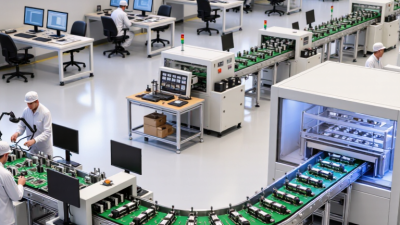
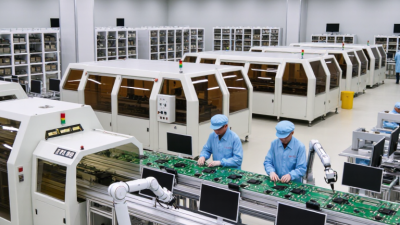
Assembly can include surface-mount placement, through-hole insertion, soldering, and board cleaning. Reflow ovens melt solder paste across carefully controlled temperature zones. For through-hole parts, wave or selective soldering may be used, depending on the board design. Automated optical inspection checks visible solder joints and component placement. X-ray inspection can help assess hidden connections, such as those beneath certain packages.
Services may also cover functional testing, programming, conformal coating, and final packaging. Test plans should reflect how the board will work in its actual product, not just whether it powers on. No inspection method catches every defect, and test coverage can be narrower than expected when fixture access is limited. It is worth reviewing those limits before a pilot run. Detailed build records can track component lots, inspection results, and test outcomes for later investigation.
An electronic design becomes a working board through a sequence of controlled steps, not a single machine. Assembly starts with reviewing the circuit files, board layout, and bill of materials. Technicians check component footprints, polarity marks, and spacing before production. This review can reveal issues such as a connector placed too close to an enclosure edge. Small details matter. A clear parts list also helps confirm that components match the design and are available before the build begins.
For surface-mount assembly, solder paste is applied through a stencil, then a pick-and-place machine positions components on the board. The board passes through a reflow oven, where a measured heat profile melts the solder. Larger or through-hole parts may need a separate soldering step. Inspection follows. Automated optical inspection can detect shifted parts or solder bridges, while X-ray inspection may help assess hidden joints beneath certain packages. Electrical testing checks whether the assembled board behaves as intended.
The process is not flawless. A prototype may reveal a footprint mismatch or a test point that is difficult to reach, even after careful design review. Feedback from inspection and testing can guide practical changes to the files before the next build. That loop helps turn a design into a board that is easier to assemble, inspect, and use.
Professional electronic board assembly services bring controlled processes, trained operators, and inspection tools together. A technician can verify solder paste on a fine-pitch board, monitor the reflow profile, then check hidden joints with X-ray inspection. Automated optical inspection catches visible placement and solder defects. Small gaps matter.
The value is consistency, not just speed. Deloitte and MAPI’s 2024 Smart Manufacturing Survey reported potential gains of 10–20% in production output and 7–20% in employee productivity from smart-manufacturing initiatives. Those figures cover manufacturing broadly, not assembly services alone, and they are not guaranteed results. Still, connected equipment and traceable process data can help an assembly partner spot recurring defects, reduce avoidable rework, and keep production records tied to each build. Not every line benefits equally. A short run with frequent design changes may need close engineering coordination more than automation. Even a capable provider can miss the mark if drawings, component substitutions, or acceptance criteria are unclear. Share those details early, and review first-article results before scaling.
Outsourcing board assembly can help when orders grow faster than in-house capacity. A small team may handle design well but struggle to staff extra shifts, maintain soldering equipment, and inspect every joint. That gap matters. A qualified assembly partner can provide production equipment, trained operators, and documented inspection steps without requiring a company to build that capacity itself.
It can also make sense for boards with fine-pitch components, mixed technologies, or demanding test requirements. Before production, share complete design files, a current bill of materials, and clear test criteria. Ask how substitutions are approved, how revisions are tracked, and what inspection records are supplied. These details reduce confusion when a board changes between prototype and production. They also make quality issues easier to investigate.
Outsourcing is not always cheaper. Setup fees, shipping time, and minimum order quantities can outweigh savings for a simple board made in small batches. Compare the full cost, not just the quoted assembly price. A pilot run can reveal practical problems, such as parts that are hard to place or test points that are difficult to reach. Review those findings before committing to larger volumes.
Why Choose Electronic Board Assembly Services?
How to Evaluate an Assembly Service Provider
A capable assembly provider should explain its process clearly, from reviewing design files to final inspection. Ask how engineers check component footprints, solder-mask clearances, and panel layouts before production. These early checks can catch costly problems, but they do not guarantee a flawless build. Request examples of inspection records, test methods, and traceability for components and production lots. A reliable team can describe what it verifies and what falls outside its checks.
Tips: Share complete files and a realistic forecast. Ask about prototype quantities, production capacity, lead-time assumptions, and how schedule changes are communicated. Small details matter.
Evaluate communication as carefully as equipment. Ask who reviews engineering questions and how design changes are approved and recorded. A sample build can reveal whether the provider follows documented steps and reports defects with useful evidence, such as close-up images or test results. Discuss how nonconforming boards are isolated and how corrective actions are tracked. Compare quotes line by line, including testing, tooling, and packaging, rather than choosing on price alone. Even a polished audit can miss a rushed handoff. Ask for a clear point of contact and written expectations before placing an order.