
How to Find a Top Electronic Board Manufacturer in China?

Finding a top electronic board manufacturer in China requires more than comparing unit prices. A reliable partner must prove process control, engineering depth, and consistent delivery. This guide explains how to evaluate suppliers before your design reaches production.

In electronic board manufacturing, small details often reveal major differences. Request factory photographs, quality certificates, process records, and recent customer references. Examine solder joints under magnification. Ask how the factory controls impedance, copper thickness, drilling accuracy, and component traceability. A capable manufacturer should explain these controls clearly, not hide behind polished brochures. IPC President and CEO John W. Mitchell has repeatedly emphasized the importance of industry standards: “Standards are the foundation of a strong electronics industry.” That principle matters when comparing Chinese suppliers.

Look beyond the first quotation. Review engineering support, prototype speed, inspection equipment, and corrective-action procedures. Ask whether the same production line will handle your future orders. Confirm material sources and test coverage in writing. Do not assume every ISO certificate guarantees excellent boards. Certificates help, but actual factory behavior matters more. No supplier is perfect. Your own specifications may also contain unclear tolerances, incomplete files, or unrealistic delivery expectations. A thoughtful manufacturer should identify these weaknesses before manufacturing begins.

The best choice is usually the supplier that communicates difficult truths early. It may question your layout, recommend a different laminate, or reject an unsafe shortcut. That honesty can prevent expensive failures later. This article will help you compare manufacturers with practical evidence, not attractive promises.
How to Find a Top Electronic Board Manufacturer in China?

Define Your Electronic Board Manufacturing Requirements

How to Find a Top Electronic Board Manufacturer in China?

Define Your Electronic Board Manufacturing Requirements

A reliable search starts with a precise product brief. State the board type, dimensions, layer count, copper thickness, and base material. Include the operating voltage, current, temperature range, and expected service life. These details help manufacturers calculate capacity and production risks accurately.

Do not send only a circuit diagram. Provide Gerber files, drill files, a bill of materials, and assembly drawings. Mention component tolerances, surface finish, soldering requirements, and inspection standards. If the board serves medical, industrial, or automotive equipment, explain its working environment clearly. Small omissions can cause expensive delays.

Think about quantity, delivery windows, packaging, and future orders. Ask how the manufacturer handles prototypes, engineering changes, traceability, and functional testing. During supplier evaluations, I have found that clear test procedures reveal more than impressive factory photographs. Request sample reports, process records, and evidence of equipment calibration. Review communication speed, but do not treat fast replies as proof of technical ability.

Early cost estimates are often wrong. Missing specifications may hide tooling, testing, or rework charges. Leave room for revision after prototype testing. A manufacturer should question unclear requirements instead of accepting every file silently. That response matters. A careful technical discussion can expose design weaknesses before mass production begins.

Research China’s Electronic Board Manufacturing Capabilities

How to Find a Top Electronic Board Manufacturer in China?

Research China’s electronic board manufacturing capabilities before comparing prices. A reliable factory should explain its PCB experience clearly, including rigid, flexible, multilayer, and high-density boards. Ask about layer counts, minimum trace widths, impedance control, and supported materials. These details reveal more than a polished website.

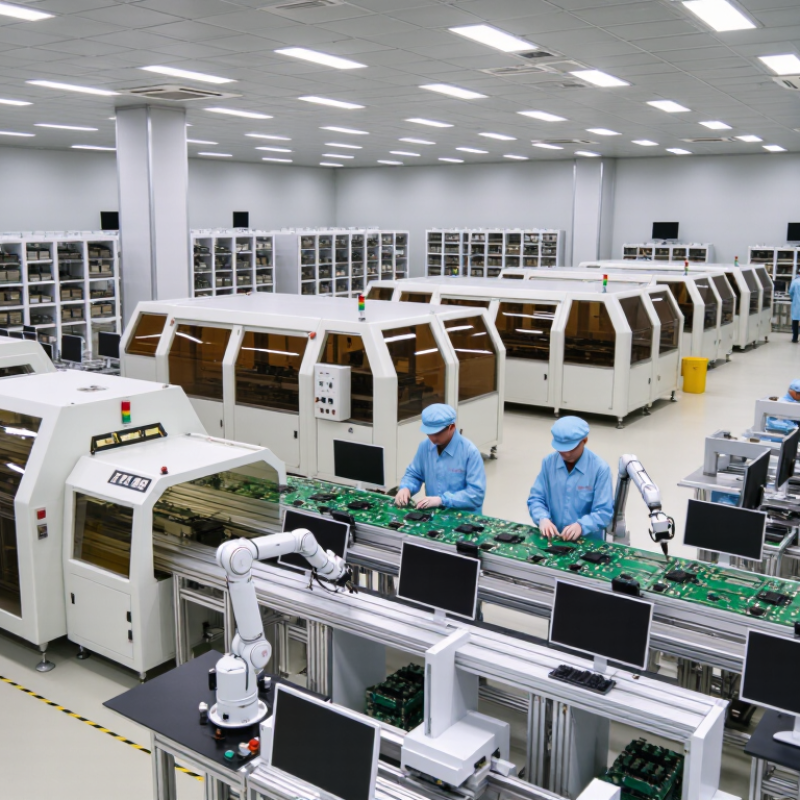
Review the production process in practical detail. Check whether the facility operates automated SMT lines, through-hole assembly, solder paste inspection, X-ray inspection, and functional testing. Request sample inspection reports and production photos with sensitive information removed. Confirm material traceability, process controls, and quality certifications such as ISO 9001. A capable manufacturer should also explain how it handles design-for-manufacturing reviews, engineering changes, and small trial orders.

Tips: Send the same technical package to several factories. Compare their questions, not only their quotations. Ask for a sample board, test records, and a clear timeline. Verify factory capacity during busy seasons. A low price may hide limited testing or weak process control. No factory is perfect. Even experienced suppliers can miss a detail, especially when drawings are unclear. I would treat fast replies as useful, but never as proof of technical ability. An on-site audit or independent inspection can expose gaps between stated capabilities and actual workshop conditions. Look for organized material storage, labeled work orders, clean soldering areas, and operators who understand inspection standards. Reliable communication matters too. Vague answers usually become expensive problems later.

China’s electronic information manufacturing sector recorded positive year-on-year value-added growth from 2020 to 2024. This macro-level indicator provides context when evaluating a PCB supplier’s manufacturing environment, technical ecosystem, supply-chain depth, and capacity for process investment. It is not a rating of any individual manufacturer.

Source: Ministry of Industry and Information Technology of the People’s Republic of China, annual electronic information manufacturing industry reports.

Evaluate Quality Systems, Certifications, and Production Standards

A reliable electronic board manufacturer in China should prove quality through daily controls, not certificates alone. The ISO Survey 2023 recorded 1,265,216 ISO 9001 certificates worldwide. This figure shows broad adoption, but certification does not guarantee disciplined production. Ask for the factory’s audit scope, certificate validity, corrective-action records, and process ownership. Check whether incoming materials receive inspection before storage. Review solder-paste controls, stencil cleaning, automated optical inspection, and final electrical testing. These details reveal more than a polished factory tour.

Production standards should match your board’s risk and application. Request compliance with IPC-A-610 for assembly acceptance and IPC-6012 for rigid printed boards, where applicable. A capable supplier should provide lot-level traceability, calibrated equipment records, and controlled engineering changes. Examine one real traveler, not a prepared sample. The World Bank’s 2023 Logistics Performance Index gave China a 3.7 score and ranked it 19th among 139 economies. That supports strong logistics potential, yet transport performance cannot replace process control. Confirm backup suppliers for critical materials and ask how delayed components affect testing schedules. I have found that confident answers are useful, but documented evidence matters more. Some factories may pass an audit and still miss small recurring defects. Review defect Pareto charts, CAPA closure times, and first-pass yield for recent batches. Numbers can be imperfect. That is exactly why they deserve questions.

How to Find a Top Electronic Board Manufacturer in China? - Evaluate Quality Systems, Certifications, and Production Standards

Evaluation Dimension What to Verify Practical Benchmark Recommended Evidence Warning Signs
Quality Management System A documented quality system covering design review, purchasing, production, inspection, nonconformity control, corrective action, and customer feedback. Processes are documented, responsibilities are assigned, records are retained, and corrective actions include root-cause analysis and effectiveness checks. Valid ISO 9001 certificate, certification scope, recent audit status, quality manual excerpts, and sample corrective-action records. A certificate is provided without scope, issuing-body details, validity dates, or evidence that the certified site matches the production site.
PCB Acceptance Criteria Whether bare printed circuit boards are inspected against recognized workmanship and acceptance requirements. Use IPC-A-600 as the agreed visual acceptance basis, with the applicable product class clearly defined in the purchase documents. Approved inspection standard, product-class definition, sample inspection report, dimensional report, and microsection or cross-section records when required. The supplier uses vague terms such as “standard quality” without defining acceptance criteria, product class, or defect limits.
PCBA Assembly Workmanship Soldering, component placement, cleanliness, lead formation, polarity, and assembly workmanship controls. Use IPC-A-610 as the agreed assembly acceptance standard and specify Class 1, Class 2, or Class 3 according to product application. Workmanship training records, operator certification records, visual inspection criteria, first-article records, and defect photographs. Acceptance is based only on operator judgment, with no documented class, inspection method, or escalation procedure.
Process Control and Traceability Control of materials, process parameters, work orders, operators, equipment, and finished products. Each lot should be traceable to material batches, production dates, equipment or line records, inspection results, and shipment records. Sample lot traveler, barcode or serialization workflow, material certificates, production history, and retention-period policy. Records are incomplete, manually altered without authorization, or unable to connect finished goods to incoming materials.
Inspection and Test Coverage Availability of automated and manual inspection for solder paste, placement, solder joints, electrical performance, and final appearance. Inspection should be risk-based and aligned with the approved test plan; critical electrical and safety characteristics require documented verification. Solder-paste inspection records, automated optical inspection reports, flying-probe or fixture-test records, functional-test results, and calibration certificates. Testing is performed only at the end of production, results are not retained, or measurement equipment has expired calibration.
Component and Material Control Authenticity, storage, moisture protection, shelf-life management, and substitution approval for components and PCB materials. Materials are approved before use, moisture-sensitive devices are handled according to manufacturer requirements, and substitutions require written authorization. Approved vendor list, incoming inspection records, purchase documentation, moisture-sensitive device logs, and deviation approvals. Unapproved substitutions, mixed date codes without control, damaged packaging, or missing storage and exposure-time records.
Environmental and Regulatory Compliance Environmental management and compliance with applicable substance restrictions and product-market requirements. Where applicable, request ISO 14001 certification and documented compliance with RoHS, REACH, conflict-minerals, or other customer-specific requirements. Current certificates, supplier declarations, material-composition records, laboratory test reports, and controlled compliance statements. Generic compliance claims lack product scope, test dates, applicable regulations, or supporting material documentation.
Industry-Specific Capability Ability to meet additional controls required for automotive, medical, aerospace, telecommunications, or other regulated applications. For automotive projects, evaluate IATF 16949 and customer-specific requirements; for regulated products, confirm the relevant design, process, and risk-control framework. Industry-specific certificate, scope statement, process-audit results, special-process approvals, risk-analysis records, and change-control procedure. The supplier claims sector experience but cannot provide applicable procedures, audit evidence, or clearly defined production scope.
Capacity and Production Stability Whether the facility can support prototype, pilot, and volume production without excessive quality variation or uncontrolled outsourcing. Capacity claims should be supported by line capability, equipment list, staffing plan, maintenance records, yield history, and documented subcontractor controls. Capacity plan, overall equipment effectiveness or yield trend, preventive-maintenance records, production schedule, and business-continuity plan. Capacity is described only in monthly quantities, with no information about product mix, utilization, bottlenecks, or backup resources.
Supplier Audit and Verification The reliability of information supplied during qualification and the consistency between documented procedures and actual shop-floor practices. Combine document review, remote or on-site audit, sample production, first-article inspection, and corrective-action follow-up before approval. Completed audit checklist, objective findings, sample approval records, corrective-action closure, and periodic requalification schedule. The supplier refuses reasonable verification, limits access to relevant records, or changes processes without customer notification.

Compare Technical Expertise, Pricing, and Delivery Performance

Choosing a Chinese electronic board manufacturer requires more than comparing quotations.

Technical expertise should appear in evidence: controlled impedance reports, solder-joint inspection records, material traceability, and recent experience with multilayer or high-density boards.

IPC’s 2024 PCB Technology Roadmap highlights rising interconnect density and tighter signal-integrity requirements. Ask for test coupons and sample data, not polished promises.

Small details matter.

Pricing needs a like-for-like comparison.

Request separate costs for tooling, engineering changes, testing, components, packaging, and shipping. A cheaper board may hide higher defect rates or weak process controls.

IPC’s electronics manufacturing research repeatedly links quality investment with stronger operational performance, although supplier data is rarely perfectly comparable.

That is an uncomfortable limitation.

Delivery performance deserves measurable proof.

The World Bank’s 2023 Logistics Performance Index gave China an overall score of 3.7 out of 5, with timeliness at 3.8. This reflects national logistics, not one factory’s reliability.

Compare quoted lead time, actual historical lead time, on-time delivery rate, and corrective-action speed. Request three months of anonymized records.

Also check how the factory handles shortages, engineering changes, and urgent rework.

My practical lesson is simple: a fast first order can mislead. A stable supplier communicates bad news early and documents recovery actions.

Verify Suppliers Through Samples, Audits, and Contract Terms

How to Find a Top Electronic Board Manufacturer in China?

Verify Suppliers Through Samples, Audits, and Contract Terms

A supplier’s website can look impressive, but a physical sample reveals more. Request boards made with the same materials, design files, and production process. Check solder joints, component placement, surface finish, labeling, and dimensional accuracy. Ask for electrical test records and traceability details. One sample is not enough. Request a small pilot batch.

An on-site audit provides useful evidence. Review incoming inspection, component storage, ESD controls, production records, and final testing. Confirm whether inspection equipment is calibrated. Speak with the quality manager, not only the sales representative. Ask how the factory handles defective boards and engineering changes. Photos may help, but they cannot replace direct verification.

Keep the contract precise. Define approved materials, revision control, acceptance standards, delivery dates, packaging, and payment milestones. Include rules for unauthorized substitutions and design changes. Clarify ownership of files, tooling, test fixtures, and technical data. Specify inspection rights and remedies for repeated defects. A vague warranty creates avoidable disputes.

Leave room for doubt. A successful sample may not represent normal production. Ask for batch records and independent testing when risk is high. Strong suppliers should answer difficult questions clearly. Their answers should match factory evidence, not only promises.