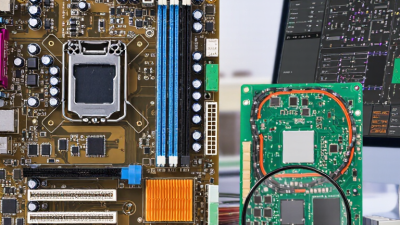
How to Source PCB Electronics Globally?

Sourcing PCB electronics globally can reduce costs, expand supplier access, and improve production flexibility. It can also introduce quality, communication, and compliance risks. A reliable sourcing strategy needs more than a competitive quotation. It requires technical judgment, documented processes, and careful supplier verification.

Start with a precise bill of materials, approved component alternatives, and clear performance requirements. Confirm whether each manufacturer has experience with the required board layers, copper thickness, surface finish, and assembly tolerances. Ask for recent quality records, factory certifications, inspection procedures, and customer references. A site audit, whether physical or remote, can reveal practical details that brochures often hide. Look for organized component storage, moisture controls, calibrated inspection equipment, and visible traceability labels.

Request prototype samples before approving volume production. Test solder joints, connector alignment, electrical performance, and thermal behavior under realistic conditions. Keep inspection standards in writing. Independent testing may be appropriate for safety-critical or high-value products. Compliance with applicable import rules, environmental requirements, restricted-substance standards, and product certifications must remain part of the sourcing plan.

Small details matter. A delayed component can stop an entire assembly line. A substituted capacitor can change product performance. Reliable logistics partners, accurate packaging instructions, and agreed delivery terms help prevent avoidable surprises. However, no global sourcing plan is perfect. Currency changes, port disruption, and sudden component shortages can still occur. Contingency suppliers and safety stock provide useful protection, but they also increase costs. Careful decisions balance resilience, price, lead time, and long-term supplier trust. That balance is the foundation of responsible pcb electronics sourcing.

How to Source PCB Electronics Globally?

Defining PCB Electronics Requirements and Sourcing Objectives

How to Source PCB Electronics Globally?

Defining PCB Electronics Requirements and Sourcing Objectives

Global PCB sourcing starts with a precise technical requirement, not a supplier list. Define the board’s dimensions, layer count, copper thickness, materials, and surface finish. Include operating voltage, current limits, temperature range, and expected service life. State whether the assembly needs through-hole, surface-mount, or mixed technology. Small details matter.

Your bill of materials should include approved alternatives, package types, tolerances, and lifecycle concerns. Identify critical components that cannot be substituted without engineering approval. Add testing requirements, such as automated optical inspection, electrical testing, or functional testing. Ask for inspection records, material declarations, and traceable production documents. Reliable evidence supports better decisions.

Sourcing objectives should balance price, quality, capacity, lead time, and communication. Set measurable targets for annual volume, prototype quantity, delivery windows, defect rates, and payment terms. Consider shipping routes, customs documentation, and regional risk before placing an order. A low unit price can become expensive after delays or rework. It happens more often than expected.

In practice, teams sometimes over-specify noncritical features while ignoring connector fit or thermal performance. That mistake deserves honest review. A practical requirement sheet should separate essential needs from preferences. Leave room for engineering feedback, because the first specification may be incomplete. Clear questions reveal more than impressive promises.

Identifying and Comparing Global PCB Suppliers

Global PCB sourcing begins with a disciplined supplier comparison, not a broad internet search. Prismark’s 2024 industry analysis estimated the global PCB market at approximately US$87 billion in 2023. That scale creates opportunity, but also uneven capability. A supplier may excel at rigid boards yet struggle with high-density interconnects, controlled impedance, or heavy copper. I compare layer count, minimum trace width, drill tolerance, surface finish, and monthly capacity against the actual design. Ask for recent cross-section images. Ask for measurable yield data. A polished presentation is not proof.

In supplier reviews, I request first-article inspection records, corrective-action reports, and on-time delivery history. IPC’s 2024 electronics industry outlook highlighted continuing pressure from material costs, labor availability, and demand volatility. These factors should enter the scorecard. The World Bank’s 2023 Logistics Performance Index evaluates customs, infrastructure, shipment reliability, logistics competence, tracking, and timeliness. I therefore compare factory performance with the shipping route, not separately. A low quoted price can lose its advantage through tooling delays, customs friction, or repeated engineering changes. Confirm whether the supplier controls fabrication, testing, and final inspection internally. Also verify applicable environmental and quality certifications through current documents, not copied certificates. My scoring model remains imperfect. Regional risk, communication habits, and small process deviations are difficult to quantify. Sometimes the supplier with the highest score still needs a supervised pilot run. That is uncomfortable, but useful.

Evaluating Quality, Compliance, and Manufacturing Capabilities

How to Source PCB Electronics Globally?

Evaluating Quality, Compliance, and Manufacturing Capabilities

Global PCB sourcing should begin with evidence, not attractive quotations. Request material specifications, process controls, inspection records, and recent test reports. A reliable supplier should explain how it manages solderability, impedance, surface finish, and component authenticity. Ask for lot-level traceability. Can each board be linked to its materials, operators, and inspection results?

Compliance requires more than a certificate attached to an email. Review declarations, restricted-substance controls, safety documentation, and regional shipping requirements. Confirm that test reports match the exact board design and production site. Independent laboratory verification can expose gaps. Paperwork alone is not enough.

Manufacturing capability must match the product’s real demands. Check layer count, minimum trace width, drilling tolerance, assembly accuracy, and expected monthly capacity. Observe whether the factory uses automated optical inspection, X-ray inspection, controlled reflow profiles, and documented calibration. A production line may look modern but still struggle with stable yields. Ask for defect rates, corrective-action records, and sample builds under similar conditions.

Small details matter. Warped panels can disrupt assembly. Poor moisture control can damage sensitive packages. Lead times also deserve testing through a pilot order, not a promise. One weakness remains easy to miss: communication quality. If engineering questions receive vague answers, later changes may become expensive. A careful sourcing process should challenge its own assumptions, because even a strong audit cannot predict every production problem.

Managing International Pricing, Logistics, and Import Requirements

How to Source PCB Electronics Globally?

International sourcing begins with landed cost, not the supplier’s unit price. Add tooling, minimum order quantities, inspection, insurance, duties, and payment fees. Copper and resin prices can shift quickly. Request quotes in a fixed currency with clear validity dates. A cheaper offer can become expensive after customs clearance.

UNCTAD’s Review of Maritime Transport 2024 reports that ships carry over 80% of global merchandise trade. That scale hides practical risks. Select air, sea, or rail according to urgency and batch value. Confirm the Incoterm, transport insurance, packaging standard, and delivery responsibility in writing. Build a small buffer for port congestion. It is not always enough.

Import preparation needs discipline. Verify the correct HS code, country of origin, commercial invoice, packing list, and product specifications. Check applicable safety, environmental, and labeling rules before production. The World Bank’s 2023 Logistics Performance Index assessed 139 economies, showing meaningful differences in customs efficiency and shipment reliability. Use that evidence when comparing routes. A supplier’s delivery promise is only one input. My own sourcing review would still challenge every assumption, especially optimistic lead times. Minor document errors can delay a complete shipment.

How to Source PCB Electronics Globally? — Managing International Pricing, Logistics, and Import Requirements

Business Dimension Practical Metric Typical Planning Data Cost or Compliance Impact Recommended Control Import and Logistics Notes
Product Classification HS code and product description Use the applicable six-digit Harmonized System heading, then confirm any country-specific tariff suffix. Incorrect classification can result in duty reassessment, customs delays, penalties, or additional documentation. Required Classification depends on function, construction, materials, assembly status, and the importing country.
Unit Pricing Quoted price basis Compare pricing at the same quantity, currency, payment term, Incoterm, test scope, packaging level, and revision. A low unit price may exclude tooling, engineering changes, inspection, freight, duties, taxes, or handling fees. Recommended Request a separated cost breakdown for bare boards, components, assembly, testing, tooling, and logistics.
Total Landed Cost Delivered cost per unit Product cost + tooling + packaging + transport + insurance + duty + import tax + broker and handling charges. Using landed cost prevents an apparently cheaper source from becoming more expensive after import expenses. Recommended Import taxes and recoverability vary by jurisdiction, importer status, product classification, and local tax rules.
Currency Exposure Quotation currency and validity Record quotation currency, exchange-rate assumption, validity period, and payment currency. A currency movement of 5% can change the converted purchase price by approximately 5% before hedging or repricing. Variable Use a consistent conversion date and include an approved exchange-rate tolerance in the sourcing model.
Payment Terms Deposit and balance structure Common commercial structures include partial advance payment with the balance due before shipment or against agreed documents. Advance payments increase supplier and cash-flow exposure; delayed payment may increase supplier pricing. Variable Tie milestone payments to approved samples, inspection results, production completion, or shipping documents.
Lead Time Order-to-delivery cycle Plan separately for engineering review, materials procurement, fabrication, assembly, testing, export clearance, transit, and import clearance. Component allocation, engineering changes, holidays, port congestion, and customs inspections can extend the schedule. Recommended Use a committed production date and a separate logistics buffer instead of treating lead time as one fixed number.
Transport Mode Air, ocean, rail, or courier service Air and courier services are generally faster; ocean transport is generally more economical for larger, non-urgent shipments. Transport cost depends on chargeable weight, volume, fuel surcharges, security fees, route, and shipment frequency. Variable For air freight, billing commonly uses the greater of actual weight and volumetric weight under the carrier’s divisor.
Incoterms Allocation of cost, risk, and responsibility Specify the named place and agreed Incoterm version, such as EXW, FCA, FOB, CIF, DAP, or DDP where appropriate. Incoterms determine which party arranges transport, export clearance, insurance, import clearance, duties, and delivery. Required An Incoterm does not by itself define product ownership, payment timing, warranty, quality, or transfer of title.
Freight Insurance Cargo coverage and declared value Confirm whether insurance is included, the insured value, covered risks, exclusions, deductible, and claim procedure. Without suitable coverage, damage, loss, moisture, mishandling, or delay may create an unrecoverable financial loss. Recommended Review coverage for electronic components, moisture-sensitive devices, shock, temperature, and route-specific risks.
Customs Documentation Commercial and transport records Common documents include commercial invoice, packing list, transport document, customs declaration, and origin information. Missing or inconsistent documents can stop clearance and create storage, demurrage, amendment, or inspection costs. Required Descriptions should identify the product accurately, including function, quantity, value, material, and country of origin.
Country of Origin Manufacturing origin and origin proof Origin is generally based on where the product was wholly obtained or underwent the applicable substantial transformation. Origin can affect duty rates, trade agreement eligibility, marking requirements, sanctions screening, and reporting obligations. Required The shipping country and manufacturing origin may differ; verify origin rules with the importing customs authority.
Import Duties and Taxes Duty rate, import VAT or sales tax Rates are determined by destination country, HS classification, origin, customs value, and applicable trade preferences. Duty and tax may be calculated on different bases and may include freight, insurance, or other dutiable additions. Variable Obtain a current ruling or customs confirmation for high-value, regulated, or technically complex products.
Electrical Compliance Safety, EMC, radio, or environmental obligations Requirements vary by destination and product function; assembled electronics may require testing, declarations, markings, or technical files. Non-compliance can prevent market entry, trigger recalls, cause detention, or increase testing and rework costs. Required Assess the finished product, not only the bare PCB, because enclosure, power supply, wireless, and intended use affect obligations.
Environmental Requirements Restricted substances, recycling, and packaging rules Check destination requirements for restricted substances, electronic waste, batteries, packaging materials, and producer registration. Documentation, labeling, recycling fees, testing, or registration may be required before import or sale. Variable Obligations often depend on product category, importer role, annual volume, and whether the item is sold to consumers.
Quality Assurance Acceptance criteria and inspection level Define drawing revision, approved bill of materials, sampling plan, visual criteria, electrical tests, functional tests, and traceability. Clear acceptance criteria reduce disputes, field failures, returns, and hidden rework costs. Recommended Use first-article approval and pre-shipment inspection for new suppliers, new revisions, or high-risk assemblies.
Packaging and Handling Moisture, electrostatic, and mechanical protection Use suitable electrostatic protection, moisture barriers where required, desiccant, humidity indicators, cushioning, and carton labeling. Inadequate packaging can cause corrosion, solderability issues, electrostatic damage, bent connectors, or transit failures. Recommended Follow the component or assembly moisture-sensitivity requirements and record packing condition before shipment.
Supply Risk Single-source dependency and continuity Assess alternate materials, second-source components, geographic concentration, capacity, tooling ownership, and recovery plans. Single-source dependency can increase exposure to allocation, export restrictions, natural disasters, logistics disruption, or insolvency. Recommended Qualify alternates before a shortage occurs; confirm that substitutions preserve fit, form, function, and compliance.
Importer Responsibilities Importer of record and customs authority Identify the legal importer, customs registration, tax identification, broker authorization, and record-retention responsibility. The importer may be responsible for classification accuracy, declared value, duties, taxes, product compliance, and post-entry audits. Required A freight forwarder or customs broker may submit declarations, but responsibility can remain with the importer.
Supplier Performance On-time delivery, defect rate, and response time Track on-time delivery, incoming defects, corrective-action closure, quote response time, and engineering-change performance. Measured performance supports fact-based supplier development, allocation decisions, and total-cost reviews. Recommended Use the same definitions and measurement periods across suppliers to make performance comparisons meaningful.

Building Reliable Supplier Relationships and Supply Continuity

How to Source PCB Electronics Globally?

Reliable PCB sourcing depends on relationships, not only low quotations. Start with suppliers who provide traceable material records, stable production capacity, and clear quality procedures. Request sample boards, inspection reports, and manufacturing photographs before approving a larger order. I also compare their response times during technical discussions. Silence can become a serious supply risk later.

Trust needs evidence. Maintain a written agreement covering specifications, testing standards, approved materials, change notifications, and delivery responsibilities. Ask suppliers to report component substitutions before production begins. Confirm that products meet applicable safety, environmental, customs, and export requirements in each destination market. An experienced supplier should explain these controls clearly, not hide behind vague promises.

Tips: Build a second qualified source before the first supplier experiences trouble. Keep a practical buffer of critical components, especially for long-lead items. Review supplier performance monthly using defect rates, delivery accuracy, response speed, and corrective-action quality. Visit the factory when possible, but do not treat one successful visit as permanent proof. Conditions change. Small delays spread. My own mistake was trusting a strong first batch too quickly. Later, a minor material change caused rework and missed production time. Regular reviews would have exposed that weakness earlier. Keep communication specific, documented, and calm when problems appear. Reliable continuity grows from repeated evidence, not optimistic assumptions.

How to Source PCB Electronics Globally? — Building Reliable Supplier Relationships and Supply Continuity

The 2023 World Bank Logistics Performance Index provides a practical reference for comparing logistics readiness across potential sourcing locations. Higher scores generally indicate stronger customs, infrastructure, shipment reliability, and supply-chain service capability.

Source: World Bank, 2023 Logistics Performance Index. Scores range from 1.0 to 5.0.