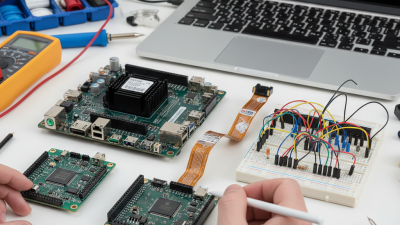
Choosing among the 2026 best printed circuit board fabrication manufacturers requires more than comparing prices or production volumes. A reliable partner must translate schematics into stable, inspectable boards. That process includes stack-up planning, copper-thickness control, impedance testing, drilling accuracy, and solder-mask registration. Small details matter. A misaligned via or rough edge can delay an entire product launch.
This guide examines manufacturers through practical evidence, including engineering support, prototype quality, production consistency, and documented quality systems. It considers capabilities for rigid, flexible, and rigid-flex boards. It also reviews surface finishes, automated optical inspection, electrical testing, and traceability. These factors reveal whether a supplier can manage both a five-board prototype and a demanding recurring order. Factory communication matters too. Clear design-for-manufacturing feedback often prevents expensive revisions.
No universal ranking can serve every buyer. A medical device team may value controlled documentation, while an IoT developer may prioritize fast prototypes and flexible minimum quantities. Published capabilities can also change during the year. That limitation deserves attention. Therefore, readers should verify certifications, sample reports, lead times, and quotations directly with each manufacturer. Ask how the factory handles failed tests, material substitutions, and urgent engineering changes. The strongest supplier is not always the largest one. It is the manufacturer that consistently matches technical requirements, communicates honestly, and delivers measurable quality from the first panel to full production.

PCB fabrication is the controlled conversion of copper-clad laminate into a tested circuit board. It covers material selection, circuit imaging, drilling, plating, solder mask application, surface finishing, and final inspection. The scope ranges from simple single-layer boards to high-density multilayer designs for automotive, medical, industrial, and communication equipment.
Market data shows why process discipline matters. Fortune Business Insights valued the global printed circuit board market at approximately USD 83 billion in 2024. Its report projects continued growth through 2032, driven by connected devices, electrification, and advanced computing. IPC industry studies also emphasize rising quality expectations and tighter supply-chain control. Numbers vary between reports. That difference deserves attention.
Manufacturing starts with laminate cutting and copper cleaning. Imaging transfers the circuit pattern, while chemical etching removes unwanted copper. Mechanical or laser drilling creates component holes and microvias. Copper plating then builds conductive walls inside those holes. Solder mask protects exposed traces, and surface finishing improves solderability. Automated optical inspection detects pattern defects, but electrical testing verifies continuity and isolation. Cross-section analysis remains valuable for checking plating thickness and layer alignment.
Small errors can compound. A slightly misregistered layer may create serious assembly problems. Moisture, rough drilling, or uneven plating can remain hidden without disciplined inspection. Experienced fabricators therefore control temperature, chemistry, tooling wear, and cleanliness throughout production. Fabrication is precise, but not flawless. That reality should shape supplier evaluation.
Copper weight is a standard PCB fabrication specification. One ounce per square foot is approximately 35 micrometers of copper thickness. Higher copper weights are commonly selected for greater current-carrying capacity and heat dissipation. Core fabrication stages include material preparation, imaging, etching, drilling, plating, solder-mask application, surface finishing, and electrical testing.
Evaluating PCB fabrication manufacturers in 2026 requires more than comparing quoted prices. A reliable supplier should show practical experience with your board type, materials, layer count, and production volume. Ask for process capability data, not broad promises. Review traceability from laminate receiving to final inspection. Lot numbers, inspection records, and controlled revisions make problems easier to investigate.
Short sentences matter. So does evidence.
A capable manufacturer should maintain documented quality controls and relevant industry certifications. Inspect its testing methods, including automated optical inspection, electrical testing, and cross-section analysis. Confirm tolerance control for drilled holes, copper thickness, impedance, and solder mask alignment. Request sample reports with sensitive information removed. This reveals how clearly the factory communicates results.
One overlooked detail is equipment calibration. An accurate machine is useless when its measurement system is overdue for verification.
Engineering support is another important criterion. Experienced teams review Gerber files, identify manufacturability risks, and suggest practical changes before production. Check whether those recommendations protect performance or merely reduce factory effort. Capacity claims also deserve careful testing. Ask about current utilization, backup equipment, material availability, and realistic delivery windows.
A fast prototype does not prove stable volume production. I have seen impressive samples fail during scaling. That possibility should remain visible during supplier evaluation. Communication can still be imperfect, but unexplained delays, changing answers, or missing records deserve attention. On-site audits, pilot runs, and independent verification provide stronger confidence than polished presentations.
Leading PCB fabrication manufacturers distinguish themselves through technology, process control, and practical production capacity. A capable manufacturer should support standard multilayer boards, high-density interconnect designs, rigid-flex structures, and high-frequency materials. Each technology demands different equipment and engineering judgment. HDI production requires accurate laser drilling, fine-line imaging, and reliable microvia filling. High-frequency boards need controlled dielectric thickness and stable copper surfaces. Small details matter.
Manufacturing capability also depends on measurable process discipline. Engineers should review impedance requirements, layer stackups, copper weight, thermal demands, and assembly conditions before accepting a design. Automated optical inspection, electrical testing, and cross-section analysis can reveal hidden defects.
Traceability is equally important. Material lots, drilling records, and plating results should remain available throughout production. In my experience, clear documentation often prevents more failures than impressive equipment lists.
Capacity must match the product’s real needs. A factory producing large consumer volumes may not handle prototypes or unusual materials efficiently. Another supplier may offer advanced technology but lack dependable delivery control. No manufacturer is perfect. Design reviews can still miss a narrow spacing issue or an underestimated heat path. That is why sample testing, capability audits, and pilot runs deserve attention before volume orders. Ask for evidence, not promises. Reliable PCB fabrication grows from repeatable results, honest communication, and willingness to correct weak processes.
The best printed circuit board fabrication manufacturers in 2026 will prove quality through repeatable processes, not polished claims. In factory evaluations, I look for ISO 9001 systems, IPC-based workmanship controls, and clear material traceability. Each production lot should connect to laminate records, operator checks, and inspection data. Small details matter. A clean drill room matters.
Production reliability depends on measurable controls. Automated optical inspection can detect solder mask gaps and misplaced copper features. X-ray inspection supports hidden-joint verification on dense boards. Controlled impedance testing is essential for high-speed designs. Reliable manufacturers also document thermal stress tests, electrical tests, and corrective actions. Still, no process is perfect. I have seen excellent first articles fail during volume production because maintenance records were incomplete. That weakness deserves honest review.
Tips: Request recent sample reports, not generic certificates. Ask how nonconforming boards are isolated and retested. Check whether engineering changes require customer approval. Review delivery performance across several quarters, since one successful shipment proves very little. A factory should explain its limits clearly. That builds trust.
Choosing the right PCB manufacturer begins with matching its capabilities to your project’s real demands. Check layer count, board thickness, copper weight, minimum trace width, and required surface finish. A supplier should explain these limits clearly, not hide them behind polished promises.
Ask for recent samples with similar complexity. Review their design-for-manufacturing feedback, inspection records, and material traceability. Certifications such as ISO 9001 or IPC-based process controls can support reliability, but documents alone prove little. Request a factory audit, video inspection, or controlled production sample. Look for clean workstations, labeled materials, calibrated equipment, and technicians who can answer technical questions.
Communication also affects manufacturing quality. Confirm response times, engineering support, prototype quantities, and how revisions are recorded. For high-density boards, ask about automated optical inspection, electrical testing, impedance control, and cross-section analysis. Get every tolerance and acceptance criterion in writing. Details matter.
Cost comparisons can mislead. A low quotation may exclude testing, tooling, packaging, or corrective work. Ask for a complete price breakdown and realistic lead time. I have seen schedules fail because one missing material specification was assumed rather than confirmed. That mistake was avoidable. A dependable manufacturer admits risks early and suggests practical alternatives. Still, no supplier is perfect; your own drawings and approval process need equal scrutiny.