Who Is the Best PCB Assembly Manufacturer in China?

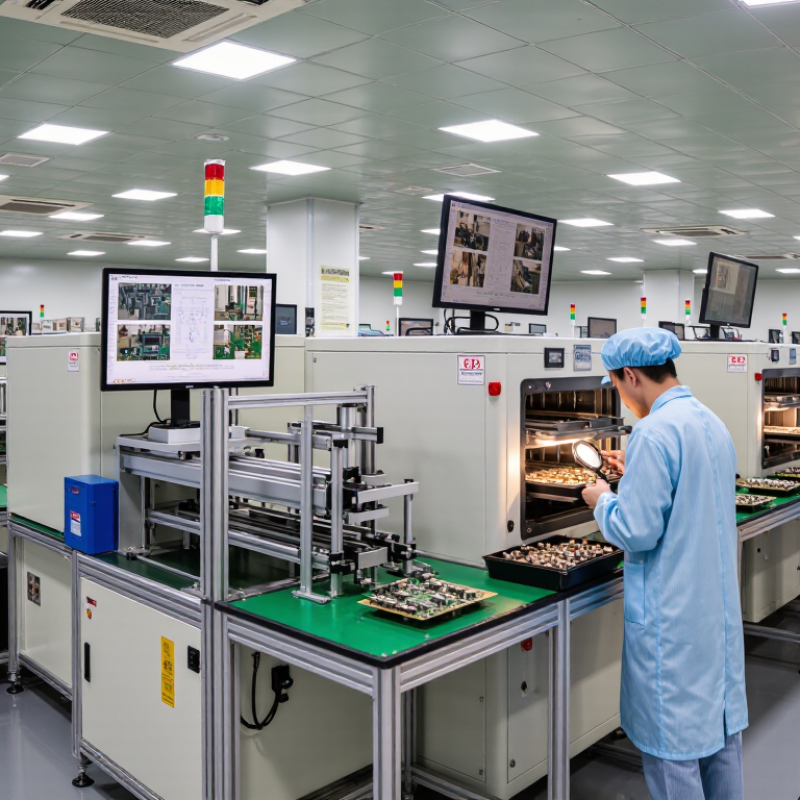
Choosing the best PCB assembly manufacturer in China is not a matter of comparing prices alone. The right partner must turn a design file into repeatable production, with traceable components, controlled soldering, and inspection records you can actually review. A bright factory floor helps, but it proves little by itself.

Prismark’s 2024 industry analysis reported that global PCB production value fell about 15% in 2023, to roughly US$69.5 billion. That contraction makes supplier resilience worth examining, not just capacity claims. IPC, the electronics manufacturing trade association, sets widely used assembly and workmanship standards, including IPC-A-610. IPC president and CEO John Mitchell has emphasized the importance of workforce skills and strong supply chains in electronics manufacturing. That principle applies directly to assembly: ask who trains operators, how process changes are controlled, and what happens when a component lot fails inspection.

The best choice depends on your product. A prototype with fine-pitch parts needs different support from a high-volume industrial board. Request a sample build, review the inspection plan, and check whether the manufacturer can explain defects without hiding behind a pass rate. Look closely at real evidence: solder-joint images, test coverage, component traceability, and corrective-action reports. Small details matter. One limitation deserves honesty: market reports use different definitions and methods, so their figures are not perfectly comparable. This guide weighs capability, quality systems, communication, and total cost to help identify a manufacturer suited to your board—not simply the biggest factory.
Who Is the Best PCB Assembly Manufacturer in China?

What PCB Assembly Covers: SMT, Through-Hole, and Mixed Builds

PCB assembly covers more than placing components on a bare board. Surface-mount technology, or SMT, places small parts such as resistors and fine-pitch chips onto solder paste. A stencil controls paste thickness, while pick-and-place equipment positions each component. Reflow heat then forms the solder joints. Automated optical inspection can flag shifted parts, missing components, or polarity errors. It helps, but it cannot reveal every hidden defect.

Through-hole assembly uses component leads inserted through drilled holes. Wave or selective soldering can secure those leads, especially on connectors and larger parts. Mixed builds combine both methods, so assembly order and heat exposure matter. A board with dense SMT parts and heavy through-hole connectors may need careful fixture planning. That detail is easy to underestimate.

When comparing manufacturers in China, ask how they review the bill of materials, check footprints, and handle first-article inspection. Also clarify whether functional testing is included. A low quote may omit useful checks; I would not assume the test scope from the price alone. Conversely, extra inspection is not automatically better if it does not target the board’s actual risks.

How IPC-A-610’s 3 Classes Define Finished-Board Acceptance

Who Is the Best PCB Assembly Manufacturer in China?

IPC-A-610 does not rank factories. It defines acceptance criteria for assembled electronic boards. Class 1 covers general products where brief service interruptions may be acceptable. Class 2 applies to products needing reliable operation, while Class 3 addresses high-performance applications where continued operation is critical. The right class depends on the product’s use, not on which class sounds most impressive.

A capable manufacturer should confirm the required class before quoting and explain how inspection supports it. Review sample assemblies for solder joints, component placement, cleanliness, and visible defects. Ask how inspectors handle borderline conditions and which document revision governs acceptance. A Class 3 requirement can affect process controls and cost, but it does not automatically suit every design. I have seen teams specify a strict class without checking whether their drawings and inspection plan match it. That gap deserves attention.

Tips: Put the required class and IPC-A-610 revision in the purchase documents. Ask for inspection records and clear defect examples. Check a real board, not just a polished presentation. Small details matter.

Which SMT Metrics Matter: CPH, First-Pass Yield, and DPMO

Who Is the Best PCB Assembly Manufacturer in China?
Which SMT Metrics Matter: CPH, First-Pass Yield, and DPMO

When comparing PCB assembly manufacturers, don’t judge speed by CPH alone. Components per hour shows placement output, but it can hide changeover delays, inspection time, and rework. Ask whether the figure reflects a real production run or a machine’s peak rate. A line placing many components quickly may still struggle with a fine-pitch package or frequent feeder changes. Context matters.

First-pass yield measures boards that pass inspection without repair. Confirm whether the reported figure includes every board and which inspection stages count. A high yield sounds reassuring. But definitions vary. DPMO, or defects per million opportunities, can help compare defect rates when suppliers use the same opportunity definitions. Ask how defects are counted, and whether repeated defects on one board count separately. For example, solder bridges found after reflow should appear in the agreed reporting method. Review all three metrics together, over several comparable builds. A useful supplier can explain dips, show traceable production records, and discuss corrective actions without blaming every issue on the design. No metric is perfect; even a careful comparison can miss variation between products.

Who Is the Best PCB Assembly Manufacturer in China? - Which SMT Metrics Matter: CPH, First-Pass Yield, and DPMO

Metric What It Measures How to Calculate or Interpret It Example for Comparing Suppliers What to Verify
CPH (components per hour) The number of components placed by an SMT placement machine or line per hour. A quoted machine maximum is not necessarily the sustained production rate. Compare the rate for the same board, component mix, line configuration, and shift conditions. Effective output can be reduced by changeovers, replenishment, inspection, stoppages, and rework. A board requiring 600 placements would theoretically need 1.2 minutes of placement time at 30,000 placements per hour, before accounting for other production factors. Ask whether the figure is a machine’s nominal rating or a measured line result. Request sustained output data for a comparable board and include changeover and downtime assumptions.
First-Pass Yield (FPY) The percentage of units that pass the defined inspection or test stage the first time, without repair, rework, or retest. FPY = units passing on the first attempt ÷ total units processed × 100%. Confirm which process stages and acceptance criteria are included. If 980 of 1,000 units pass the specified stage on the first attempt, FPY is 98%. The remaining 20 units did not pass on the first attempt. Request results by product or process stage, along with the reporting period, sample size, exclusions, and treatment of reworked units.
DPMO (defects per million opportunities) The number of defects normalized to one million defined defect opportunities. It accounts for the number of opportunities per unit. DPMO = defects ÷ (units inspected × opportunities per unit) × 1,000,000. The opportunity definition must be consistent for a meaningful comparison. If 20 defects are found in 1,000 units with 100 defined opportunities per unit, DPMO is 200. If FPY is 98% and there is exactly one pass/fail opportunity per unit, the corresponding first-pass failure rate is 20,000 per million units; this is not automatically the DPMO for a multi-opportunity process. Check how defects and opportunities are defined, whether multiple defects on one unit are counted separately, and whether data covers the same products and inspection points.
Inspection and test coverage The stages used to detect assembly defects, such as solder-paste inspection, automated optical inspection, X-ray inspection, and electrical or functional testing. Coverage should be matched to the board design and risk. No single inspection method detects every defect type. Compare which processes are used for fine-pitch parts, hidden solder joints, through-hole components, and functional requirements. Request the inspection plan, test coverage, defect classification method, and escalation process for recurring issues.
Reporting consistency Whether production and quality results are recorded using stable definitions and traceable data. Compare metrics only when the product scope, time period, process stage, and calculation method are aligned. Ask for dated reports tied to a comparable product family rather than an isolated best-case result. Confirm lot traceability, report dates, sample sizes, and whether the data can be reconciled with inspection and test records.

Comparison note: These examples are calculations for illustrating the metrics, not performance claims about any manufacturer. There is no single universally best CPH, FPY, or DPMO value: results depend on board complexity, component mix, process scope, and measurement definitions. Compare like-for-like, documented production data.

How RoHS’s 10 Restricted Substances Shape Component Sourcing

When choosing a PCB assembly manufacturer in China, ask how RoHS controls are built into component sourcing. RoHS restricts ten substances: lead, mercury, cadmium, hexavalent chromium, PBB, PBDE, DEHP, BBP, DBP, and DIBP. Limits generally apply to each homogeneous material, not the finished board as a whole. Most listed substances have a 0.1% limit; cadmium has a 0.01% limit. Details matter.

A capable assembler should connect each bill-of-materials entry to current supplier declarations and identifiable part numbers. Ask how substitutions are reviewed, especially when a component becomes unavailable. Incoming records and lot traceability help link purchased parts to production batches. For solder, coatings, and cable materials, request evidence that matches the actual part or material—not just a general company statement. Paperwork can lag reality.

RoHS exemptions may apply to specific uses, and their scope or validity can change. Confirm requirements for the product and market rather than assuming every part follows the same rule. A supplier’s answer should be specific and supported by records. If documents conflict, pause and investigate before approval. The best partner makes that check routine, though no paperwork alone can prove every batch is perfect.

How to Compare Chinese PCBA Suppliers by Certifications, Capacity, and Cost

Who Is the Best PCB Assembly Manufacturer in China?

Comparing Chinese PCBA suppliers takes more than checking a low quote. Review certifications, but confirm their scope, issuing body, and expiry date. A certificate matters only when it covers the actual facility and processes handling your boards. Ask how the supplier controls component traceability, soldering quality, and inspection records. For capacity, compare monthly output with your order size, board complexity, and expected ramp schedule. A large factory is not automatically the right fit.

Tips: Request a sample inspection report and a capacity plan for your product. Ask for separate pricing on components, assembly, testing, and shipping. Keep the answers in writing.

Cost should be considered alongside yield, lead time, and engineering support. A very low quote may exclude testing or rely on optimistic component availability. Ask what happens when a part is delayed or a board fails inspection. No supplier is perfect, and the first comparison may miss a detail. That is why a small pilot order can reveal gaps before production scales. Look for clear answers, consistent records, and a process your team can verify—not just a polished sales presentation.

Who Is the Best PCB Assembly Manufacturer in China?

Compare Chinese PCBA suppliers by certifications, capacity, and cost.

Suggested evaluation weights—not audited market data or supplier quotes. Verify relevant certifications, available production capacity, and total landed cost against your product requirements.