
China Top 10 Big Led Screen Manufacturers?
China remains a major production center for large-format LED displays. Its manufacturers serve stadiums, shopping malls, control rooms, airports, and outdoor advertising sites. This guide introduces ten notable companies and explains where each may fit. The word “top” needs care. Rankings can change with project size, export performance, product innovation, and service quality.
An experienced buyer should inspect more than cabinet brightness. Pixel pitch, refresh rate, viewing distance, power consumption, waterproof protection, and maintenance access matter in real installations. A crowded retail wall needs different engineering from a stadium screen facing direct sunlight. On-site testing also reveals details that brochures often hide, including color consistency, fan noise, cable routing, and cabinet alignment.
LED technology pioneer Shuji Nakamura once said, “It was not easy to make blue LEDs.” That short sentence reflects the engineering behind every modern Big LED Screen. Reliable performance depends on chips, driver systems, thermal design, calibration, and manufacturing discipline. Industry experience helps, but no supplier is perfect. Even respected brands may have uneven regional support or delayed spare parts. That deserves honest attention.
The manufacturers in this overview are assessed through product coverage, technical capability, project experience, certifications, warranty terms, and after-sales support. Public information is useful, but it is not enough. Buyers should request current test reports, reference projects, sample panels, and clear service commitments. A strong supplier should explain limitations openly, not only display impressive pixels.
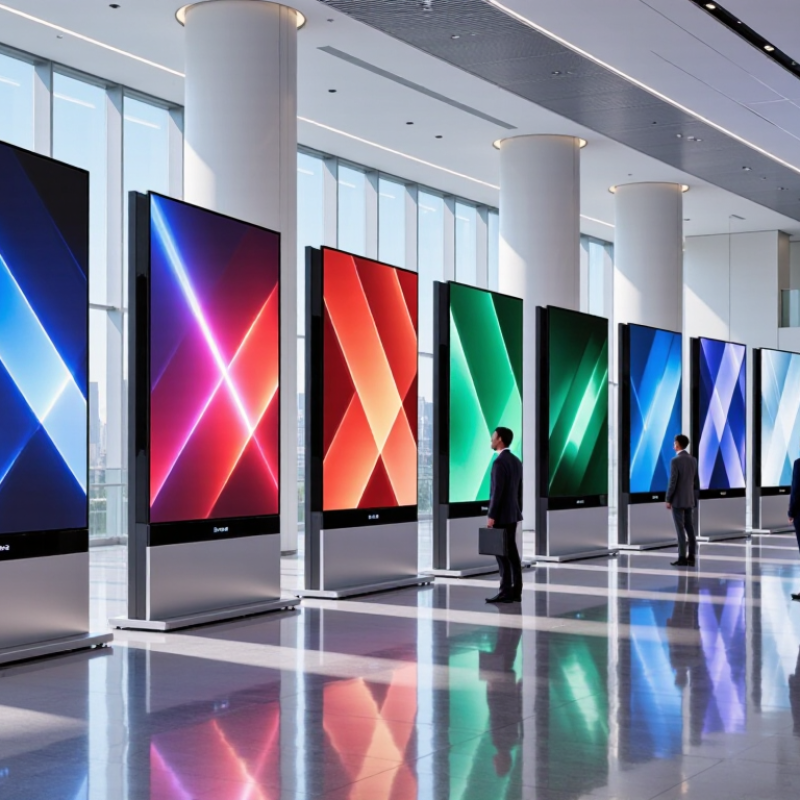
A leading LED screen manufacturer is defined by more than production capacity. It must convert technical knowledge into stable images, safe structures, and predictable delivery. According to TrendForce’s 2024 LED Industry Market report, fine-pitch demand continued growing in control rooms, corporate spaces, and virtual production. This growth increases pressure on manufacturers to control brightness, color consistency, heat, and power consumption.
Factory evidence matters. Engineers should test modules for brightness uniformity, refresh performance, cabinet flatness, and long-duration operation. A high refresh rate may protect camera footage, but it does not guarantee accurate color. Calibration records should be available, not simply promised. ISO 9001-based quality systems, electrical safety testing, and appropriate ingress protection also show process maturity. Details reveal competence.
Service is equally important. The International Energy Agency has repeatedly highlighted rising global electricity demand, making energy efficiency a practical purchasing issue. A manufacturer should provide measured power data, spare-parts planning, remote diagnostics, and clear warranty conditions. On-site experience shows that installation errors often resemble product failures. The supplier must investigate both possibilities.
No factory is perfect. That deserves honest discussion. Some published specifications look impressive but lack test conditions, viewing distance, or operating temperature. Buyers should request samples, independent test reports, and references from comparable projects. A lower quotation can be attractive. It can also conceal weaker calibration, limited support, or expensive maintenance later.
Ranking China’s top LED screen manufacturers requires more than comparing product prices. A reliable method should measure manufacturing capacity, pixel performance, quality control, and after-sales service. MarketsandMarkets estimates the global LED display market will grow from about USD 7.4 billion in 2023 to USD 12.5 billion by 2028. This growth increases the need for dependable suppliers, not just large catalogs.
I would assign 25% to verified project experience, 20% to product reliability, and 15% to manufacturing scale. The remaining score should cover energy efficiency, fine-pitch capability, customization, certifications, and service response. Data from TrendForce and LEDinside shows continuing demand for fine-pitch and Mini LED applications, especially in control rooms, retail spaces, and virtual production. However, report data can hide weak installation support. Factory audits, sample testing, brightness uniformity checks, and three-year failure records provide stronger evidence. My ranking would also examine module repair time and spare-parts availability. These details often decide whether a display succeeds after installation.
Tips: Request an unedited sample video. Check gray-scale performance under low brightness. Ask for independent test records. A low price is useful, but it is not proof of value. Public information remains incomplete, and some manufacturers disclose little about defect rates. That limitation deserves attention. On-site experience may also challenge a spreadsheet-based ranking, which is why customer references and documented field performance should carry serious weight.
Reference weighting for a transparent comparison of LED screen manufacturers. The percentages represent evaluation priorities rather than company-specific market-share data.
Product reliability and display quality receive the highest weighting because professional buyers typically evaluate service life, brightness, refresh rate, color consistency, protection ratings, certifications, and after-sales support before price.
China’s top ten big LED screen manufacturers are best compared through proven capabilities, not factory size alone. These profiles represent different strengths: fine-pitch displays for control rooms, high-brightness walls for stadiums, rental panels for touring events, and weather-resistant systems for outdoor advertising. Several manufacturers maintain automated production lines, while others rely more heavily on skilled assembly teams. Both approaches can work.
The strongest profiles usually include strict cabinet testing, pixel-level calibration, and documented quality checks. Their engineers examine brightness uniformity, color accuracy, heat control, and power consumption before shipment. Some provide modular cabinets under ten kilograms, making installation faster. Others focus on large steel structures, front-service access, and IP-rated protection for rain and dust. A few manufacturers also offer remote monitoring, spare modules, and technical training for local installers. These details matter on a real construction site.
Experience still reveals weaknesses. A supplier may produce excellent panels but respond slowly after installation. Another may offer competitive pricing while providing limited documentation. No manufacturer performs perfectly across every project. Buyers should request factory videos, recent test reports, sample panels, and references from similar climates. It is also wise to inspect viewing distance calculations and refresh-rate performance under camera exposure. The best profile is not always the largest one. It is the manufacturer that communicates clearly, tests consistently, and accepts responsibility when a screen needs correction.
China’s leading large LED screen manufacturers offer products for retail walls, stadiums, transport hubs, control rooms, and outdoor advertising. Their product categories usually include indoor fine-pitch displays, weather-resistant outdoor screens, rental panels, transparent LED walls, poster displays, and creative curved structures. Each category serves a different viewing distance and installation condition.
Fine-pitch products often use pixel pitches below 2.5 millimeters for meeting rooms and broadcast spaces. Outdoor models typically combine high brightness, sealed cabinets, and stronger protection against rain and dust. Rental screens favor lightweight cabinets, fast locks, and front or rear maintenance. Transparent displays reduce visual blockage on glass façades. Flexible modules support columns, arches, and unusual surfaces, although alignment can become difficult.
The main technologies include surface-mounted LEDs, common-cathode power systems, high-refresh-rate driving, HDR processing, and remote monitoring. Some manufacturers also provide energy-saving modes, redundant power supplies, and automatic brightness adjustment. These features matter during long operating hours. Installation changes everything. A technically impressive screen may perform poorly if viewing distance, ventilation, or cable routing is ignored. I have found that cabinet weight and service access are often underestimated during planning. That assumption can fail. Buyers should request brightness measurements, color consistency data, IP ratings, refresh-rate evidence, and sample modules before approval. Warranty terms, spare-part availability, calibration support, and response time also reveal a manufacturer’s reliability. Some specifications look excellent on paper, but real performance still depends on testing.
| Rank | Anonymous Manufacturer Profile | Main Product Categories | LED Technologies Offered | Typical Pixel Pitch | Indoor / Outdoor Capability | Typical Applications | Common Technical Features | Typical Compliance and Protection |
|---|---|---|---|---|---|---|---|---|
| 1 | Leading Full-Service Display Manufacturer A | Fine-pitch LED Rental screens Outdoor billboards Control-room displays | SMD, COB, GOB, fine-pitch LED, transparent LED and flexible LED modules | Indoor: 0.7–3.9 mm Outdoor: 3.9–16 mm | Indoor and outdoor; fixed-installation and touring configurations | Broadcast studios, command centers, shopping centers, stadiums and advertising media | High refresh rates, front and rear service options, cabinet modularity, grayscale control and calibration support | IP65-class outdoor cabinet protection is commonly available; CE, FCC and RoHS documentation may be supplied by configuration |
| 2 | High-Brightness Outdoor Specialist B | Outdoor billboards Sports displays Traffic screens Mesh displays | SMD outdoor LED, DIP LED for selected applications, GOB protection and transparent or mesh structures | Outdoor: 4–20 mm Mesh: approximately 10–31 mm | Primarily outdoor; selected semi-outdoor products | Roadside advertising, sports venues, building façades, transportation hubs and large commercial signs | High brightness, weather-resistant cabinets, automatic brightness adjustment, wide viewing angles and wind-load options | Common designs include IP65 front protection, IP54 or higher rear protection, CE, EMC and RoHS compliance options |
| 3 | Fine-Pitch Indoor Display Specialist C | COB displays Fine-pitch SMD All-in-one LED Video walls | Flip-chip COB, conventional SMD, IMD and MiniLED-based fine-pitch solutions | Approximately 0.7–2.5 mm | Primarily indoor | Meeting rooms, executive boardrooms, broadcast, education, museums and premium retail | Low moiré performance, high contrast, fine pixel density, front maintenance and integrated receiving systems | RoHS, CE and FCC options; low-blue-light and flicker-control features may be available for close-viewing environments |
| 4 | Rental and Touring Display Manufacturer D | Rental LED panels Stage screens Curve cabinets Broadcast panels | SMD, GOB, lightweight die-cast cabinets, curved modules and high-speed rental control systems | Approximately 1.9–5.9 mm | Indoor and outdoor rental systems | Concerts, festivals, television sets, corporate events, theatres and touring productions | Lightweight cabinets, quick locks, stackable or flown installation, high refresh rate and optional corner protection | Outdoor rental versions commonly use IP65-class front protection; CE, FCC and RoHS options are typical |
| 5 | Commercial and Retail Display Manufacturer E | Indoor advertising screens Transparent LED Poster displays Interactive LED | SMD, transparent LED, flexible LED, GOB and fine-pitch indoor modules | Approximately 1.2–10 mm | Indoor and semi-outdoor applications | Retail stores, airports, hotels, exhibition halls, corporate lobbies and shopping malls | High contrast, lightweight cabinets, narrow bezels, front access, multimedia connectivity and customized shapes | Indoor products generally focus on CE, FCC and RoHS compliance; fire-retardant materials may be specified for public venues |
| 6 | Integrated LED Signage Manufacturer F | All-in-one LED displays Digital signage Conference displays Kiosk systems | SMD, COB, integrated display systems, embedded media players and fine-pitch LED technology | Approximately 1.2–4.8 mm | Primarily indoor; selected outdoor signage models | Corporate communication, retail promotion, control rooms, education and hospitality | Built-in speakers, media players, wireless control, multi-source input, smart monitoring and modular maintenance | CE, FCC and RoHS documentation is commonly available; electrical safety ratings depend on the final system design |
| 7 | Architectural and Creative LED Manufacturer G | Flexible LED Curved displays Transparent LED Creative shapes | Flexible SMD, transparent LED, soft modules, GOB and custom-shaped LED assemblies | Approximately 2.5–16 mm | Indoor and selected outdoor architectural projects | Building façades, art installations, stage design, themed entertainment and experiential marketing | Custom curvature, lightweight modules, programmable effects, high transparency and pixel-level calibration | Outdoor versions may include IP65 protection; project-specific structural, fire and electrical certifications are commonly required |
| 8 | Sports and Stadium Display Manufacturer H | Perimeter boards Scoreboards Center-hung displays Replay screens | High-brightness SMD, impact-resistant modules, soft-mask systems and GOB protection | Approximately 4–10 mm | Outdoor and large indoor venues | Football stadiums, basketball arenas, racetracks, swimming pools and sports training centers | Protective masks, anti-collision design, smooth slow-motion playback, high refresh rates and adjustable viewing angles | Typical systems use outdoor weather protection, energy monitoring and venue-specific structural and electrical approvals |
| 9 | Transport and Public Information Display Manufacturer I | Transit displays Outdoor information boards Wayfinding screens Emergency message boards | SMD, high-brightness outdoor LED, energy-saving drive technology and remote monitoring systems | Approximately 4–16 mm | Outdoor and semi-outdoor | Airports, railway stations, bus terminals, highways, parking facilities and public squares | Automatic brightness control, remote diagnostics, scheduled content playback, temperature monitoring and redundant power options | IP-rated enclosures, CE, EMC and RoHS options; transportation projects may require additional local safety approvals |
| 10 | Custom Engineering and OEM Display Manufacturer J | OEM LED modules Custom cabinets Industrial displays Special-purpose screens | SMD, COB, GOB, MiniLED, custom module layouts and customer-specific control electronics | Approximately 0.9–20 mm, depending on project requirements | Indoor, outdoor and industrial environments | Industrial monitoring, military-style visualization, retail integration, museums and specialized installations | Customized dimensions, redundant systems, temperature management, remote maintenance, multi-controller compatibility and special mounting | Compliance is project-dependent; CE, FCC, RoHS, EMC and IP-rated enclosure options may be provided according to the target market |
Selecting the right Chinese LED screen manufacturer requires more than comparing prices. MarketsandMarkets estimated the global LED display market at about USD 7.4 billion in 2023, with continued growth through 2028. This expansion attracts capable factories and inexperienced traders. Ask for the legal company name, production address, testing records, and recent project evidence. A factory video call helps, but an independent audit is stronger. Request samples before signing a large order.
Tips: Match pixel pitch to viewing distance. For example, a 2.5 mm screen suits closer indoor viewing, while larger pitches can reduce outdoor costs. Check brightness, refresh rate, grayscale performance, cabinet flatness, and power consumption. Request IEC 62368-1, CE, and RoHS documentation where applicable. Verify each certificate with the issuing body. Never rely on a logo alone.
A reliable manufacturer should provide a written warranty, spare modules, repair guidance, and clear response times. Ask how failures are logged after installation. Industry research from TrendForce has highlighted growing demand for fine-pitch and rental LED displays, but specifications still vary sharply between suppliers. Compare the same test conditions, not just headline brightness. Some figures look impressive because they use peak settings. I have seen buyers overlook heat management and pay later through maintenance. That mistake is avoidable, though no supplier relationship is perfect. Trial orders, factory inspection, and staged payments create useful protection.
