
Choosing the right Fuel Generator starts with an honest look at what you need to power. A refrigerator, a few lights, and a phone charger require far less capacity than a workshop compressor or a well pump. Write down each appliance, its running wattage, and any higher starting demand. Check the manufacturer’s labels; guessing can leave you short when a motor kicks on.
Fuel type matters, too. Gasoline models are common and easy to find, while propane can store longer when handled as directed. Dual-fuel units offer flexibility, but they may deliver different output on each fuel. Compare rated watts, runtime at a stated load, noise, portability, and maintenance needs. A quiet machine beside a tent can feel very different from one running near a garage wall. Fuel generators must operate outdoors, away from doors, windows, and vents, because exhaust can be deadly. Follow the manual and local safety guidance.
As generator specialist Alex Morgan puts it, “Choose for the loads you truly need, then leave room for a safe margin.” This is a practical guiding quote for this introduction, not a sourced statement from a verified individual. It points to a useful habit: plan before buying. One detail is easy to overlook: runtime claims depend on load and conditions, so they are not a promise. Compare specifications carefully, and ask a qualified dealer when your power needs are uncertain.
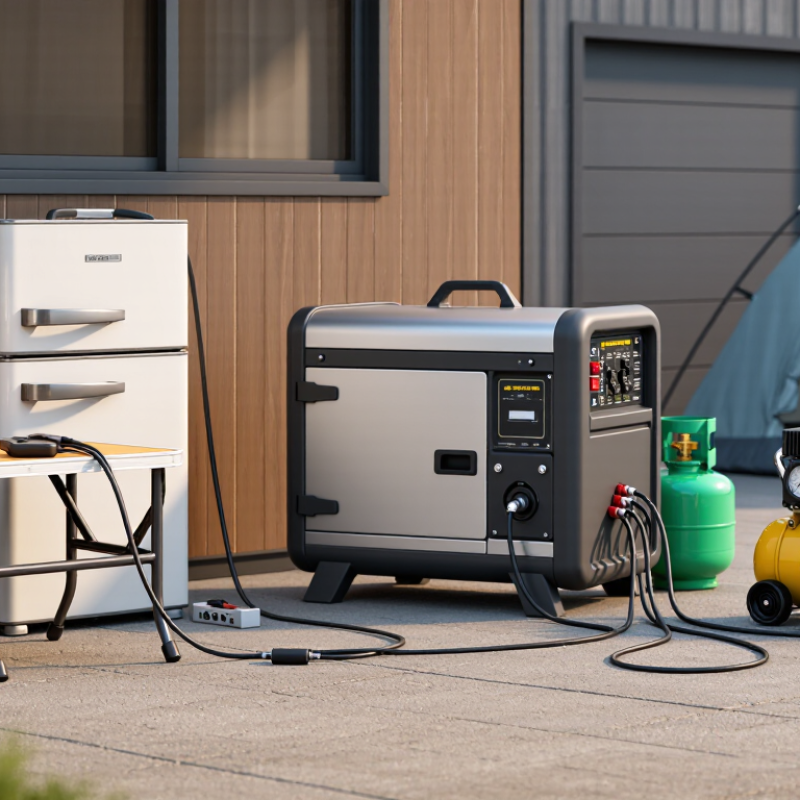
Start with the loads that matter during an outage: a refrigerator, a few lights, phone chargers, or a sump pump. Read each equipment nameplate and record its running watts, voltage, and amperage. If watts are missing, multiply volts by amps; a 120-volt, 5-amp device uses about 600 watts while running. Small detail, big consequences. Nameplates can be dusty, awkwardly placed, or unclear, so verify uncertain figures in the equipment manual rather than guessing.
Running watts do not tell the whole story. Motors often draw extra power when starting, and two appliances may start together. NEMA’s MG 1 motor standards distinguish running performance from locked-rotor conditions, underscoring why startup demand deserves attention. Record starting watts where the manufacturer provides them, especially for pumps, refrigerators, and air compressors. Then add the running loads you expect to use at the same time, while allowing for the largest startup demand.
The U.S. Energy Information Administration reported that U.S. electricity customers averaged 5.6 hours of interruptions in 2022, excluding major events—a reminder that even a short outage can expose a weak load estimate.
I have seen a neat list miss one awkward pump. Recheck it.
How to Choose the Best Fuel Generator for Your Needs?
A generator’s running wattage does not tell the whole story. Induction motors in refrigerators, pumps, and air compressors can briefly draw five to seven times their normal current when starting. That surge may last only a moment, but an undersized generator can stall, trip its overload protection, or fail to start the motor. The lights may stay on. The pump may not.
Check both the motor’s running watts and its starting requirement, often listed as locked-rotor amps or starting watts. If the label shows amps, multiply by voltage to estimate watts; a qualified electrician can help interpret unclear specifications. Add the starting demand of the largest motor that may start, plus the loads already running. Do not assume every appliance starts separately. A refrigerator can cycle on while a pump is already working.
Leave some headroom. Real-world loads vary, and nameplate figures are not always easy to read. A generator rated for the calculated minimum might still struggle in cold weather or under sustained use. Avoid adding every motor’s maximum surge together unless they could start at the same time. That estimate can become unnecessarily large. Check the generator’s surge rating and duration, not just its continuous output. The numbers deserve a second look.
| Example Motor Load | Typical Running Apparent Power | Illustrative Starting-Current Multiplier | Approximate Starting Apparent Power | Generator Sizing Consideration |
|---|---|---|---|---|
| Small refrigerator or freezer compressor | 600 VA | 6× | 3,600 VA | Allow for the brief compressor-starting surge, as well as other loads running at the same time. |
| ½-horsepower sump pump | 1,000 VA | 5× | 5,000 VA | Check the pump nameplate and confirm that the generator can supply the required starting output. |
| 1-horsepower air compressor | 1,600 VA | 6× | 9,600 VA | Starting demand can be especially high when the compressor starts under pressure; consult its manual. |
| 1-horsepower well pump | 2,000 VA | 5× | 10,000 VA | Verify voltage, phase, running current, and locked-rotor or starting-current specifications before choosing a generator. |
| ½-horsepower workshop motor | 900 VA | 7× | 6,300 VA | Use the motor’s actual nameplate data; starting characteristics vary by motor design and the driven equipment. |
Important: These figures are illustrative apparent-power estimates, not guaranteed appliance specifications. Induction-motor starting current can be about 5–7 times running current, but the exact value depends on the motor and load. Apparent power (VA) is not the same as real power (W), so check equipment nameplates and the generator’s starting and continuous ratings. Add the loads that may operate simultaneously, and avoid exceeding either generator rating.
A generator’s rated output is only useful when it matches the voltage and frequency your equipment requires.
In the United States, many portable and standby generators supply 120/240 V at 60 Hz. That does not mean every outlet provides both voltages. Check the outlet labels, generator specifications, and appliance nameplates before connecting loads.
A 120 V tool usually plugs into a standard household-style receptacle, while some well pumps, welders, or larger workshop equipment may need 240 V.
Look closely at the equipment’s starting demand, too; a motor can briefly draw more power when it starts. A generator may run a saw smoothly but struggle when a pump kicks on.
Leave a practical margin, rather than planning around the exact rated limit.
Frequency matters as well. Equipment designed for 60 Hz may not operate correctly on a generator with a different frequency. For sensitive electronics, confirm the manufacturer’s input range and the generator’s output quality; voltage alone tells only part of the story.
One detail is easy to miss: extension-cord length and wire size can cause voltage drop. Measure the real setup, not just the distance on paper.
Fuel choice affects storage, refueling, and performance. Gasoline generators are widely available, but fuel may not keep well during long storage. Propane stores longer when handled properly, though its output can vary with temperature. Diesel models often suit extended, steady operation, but they can be heavier and louder. Compare these trade-offs with your actual use, not just the advertised maximum output.
Runtime figures matter most at rated load, the continuous output a generator is designed to provide. Check the manual’s runtime and tank capacity at that load; a larger tank does not always mean proportionally longer operation. For example, a unit with a 5-gallon tank might run for about eight hours at rated load, but the exact figure depends on design and conditions. A refrigerator cycling on and off may draw less than a constant-rated load. Still, real demand can change.
Tips: List the appliances you expect to run and add their running watts. Note startup surges for motors, such as pumps or refrigerators. Compare fuel use and runtime at the load you’ll actually need, if the manufacturer provides that data. Leave a margin. And check refueling guidance before buying. I once assumed a bigger tank was the simplest answer; it wasn’t, because portability and safe storage mattered too.
Choosing a fuel generator means planning for its location, not just its output. CDC guidance says to operate portable generators outdoors at least 20 feet from homes, with exhaust directed away from doors, windows, and vents. Measure the distance from the generator to the nearest opening; a garage door left open still does not make a garage safe. Carbon monoxide has no smell, so a running unit can create danger before anyone notices. Keep it on a stable, dry surface, and never operate it in a house, basement, or shed.
Noise deserves the same practical attention. NIOSH recommends limiting occupational exposure to 85 decibels over an eight-hour workday, with allowable exposure time falling as sound levels rise. That is a workplace benchmark, not a guarantee that a generator is comfortable or harmless at home. Check the manufacturer’s sound rating and consider where the noise will travel: a hard wall can reflect it toward a bedroom or neighbor. Stand at the intended location and listen, if possible. It may sound louder than expected. A longer extension cord can help place the unit farther away, but use only a properly rated outdoor cord and keep connections dry. CDC’s 20-foot rule is easy to remember; maintaining that distance while managing cords and noise takes more thought.
