How to Choose the Best Medical Air Purifier for Your Home?
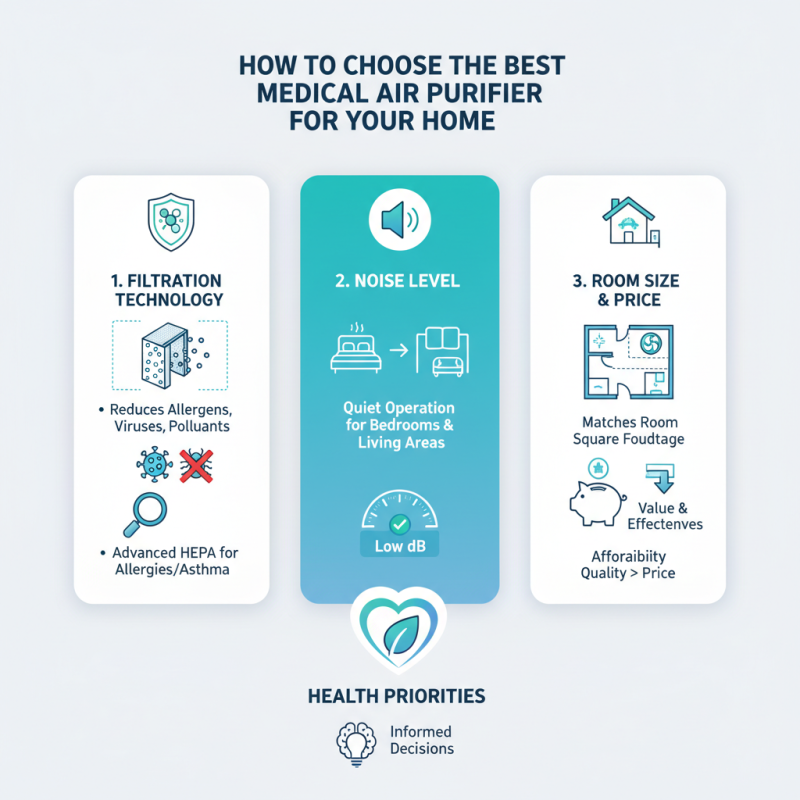
Choosing the right medical air purifier for your home can feel overwhelming. With so many options available, it's essential to understand what features matter most. A medical air purifier helps reduce allergens, viruses, and pollutants in the air. This is crucial for maintaining a healthy living environment.
Many consumers might focus solely on the price. However, while affordability is important, the quality and effectiveness of the purifier are key. A cheaper model may not provide the level of filtration needed for specific health concerns. For example, those with allergies or asthma may require advanced HEPA filters that can trap smaller particles.
Also, consider the noise level. Some models operate quietly, while others can be quite loud. This can be a vital factor if you plan to use it in bedrooms or living areas. Researching models that suit your space can lead to better comfort and air quality. Remember, choosing a medical air purifier is a reflection of health priorities. Make informed decisions based on your unique needs.
Understanding the Role of Air Purifiers in Medical Settings
Air purifiers play a crucial role in medical settings. They remove harmful particles, allergens, and pathogens from the air. This is especially important in hospitals and clinics, where patients are vulnerable. In such environments, the air quality directly affects recovery and health outcomes.
Choosing the right air purifier is not easy. Many factors must be considered, such as filter type and airflow rate. Some purifiers rely heavily on HEPA filters, which capture 99.97% of microscopic particles. Yet, not all HEPA filters are created equal. Some might need frequent replacement, adding to maintenance costs.
It’s important to realize that air purifiers cannot eliminate all contaminants. They may struggle with volatile organic compounds or gases. Regular cleaning and proper ventilation also play significant roles in maintaining a healthy environment. A reliable air purifier should support, not replace, good hygiene practices.
How to Choose the Best Medical Air Purifier for Your Home?
| Feature | Description | Ideal Use Case |
| HEPA Filter | Removes 99.97% of particles that are 0.3 microns or larger. | Asthma and allergy sufferers. |
| Activated Carbon | Absorbs odors and chemical vapors. | Homes with pets or strong odors. |
| UV-C Light | Kills microorganisms such as bacteria and viruses. | Hospitals or clinics, and during flu seasons. |
| CADR Rating | Clean Air Delivery Rate indicating the purifier's effectiveness. | Users needing efficient air purification in larger rooms. |
| Noise Level | Measurement of sound produced by the purifier. | Sleep-sensitive individuals and children. |
| Energy Star Certification | Indicates energy-efficient models. | Eco-conscious consumers. |
Key Features to Look for in a Medical Air Purifier
When selecting a medical air purifier, key features play a crucial role. Look for a high-efficiency particulate air (HEPA) filter. This type of filter can capture 99.97% of particles as small as 0.3 microns. Allergens, dust, and pollen are all on this scale. A good HEPA filter can significantly improve air quality.
Another feature to consider is the purifier's clean air delivery rate (CADR). This metric indicates how effectively the unit can filter air. A higher CADR means faster cleaning. It's essential to match the CADR rating to your room size. Otherwise, the effectiveness may suffer.
Don't forget noise levels. Some models operate quietly, while others can be disruptive. Make sure you can tolerate the sound during day or night. Also, consider maintenance requirements. Filters need changing regularly. Missing this can lead to decreased performance. Regularly check for user reviews on maintenance ease. Balancing these features is important for your health.
The Importance of HEPA Filters in Controlling Airborne Particles
HEPA filters play a crucial role in maintaining indoor air quality. Studies show that HEPA filters can capture up to 99.97% of airborne particles sized 0.3 microns or larger. This includes dust, pollen, and pet dander. Such efficiency becomes vital for individuals with allergies or respiratory issues. According to the Environmental Protection Agency, indoor air can be two to five times more polluted than outdoor air.
When shopping for a medical air purifier, consider the filter's efficiency rating. A HEPA filter's ability to trap fine particles will improve your living environment. Look for models with additional features, such as activated carbon filters. These can help reduce odors and chemicals in the air.
Tips: Regularly check and replace your HEPA filters. Ignoring this can reduce purification efficiency. A monthly reminder can help. Also, pay attention to the manufacturer's specifications for room size coverage. An inadequate purifier may not effectively clean your space. Remember, not all air purifiers are the same; some may not truly meet HEPA standards. Do your research to ensure quality.
Airborne Particles Removal Efficiency of Various Air Purifiers
This chart illustrates the removal efficiency of different types of air purifiers for airborne particles. HEPA filters demonstrate the highest efficiency, making them essential for effective air purification in homes.
Evaluating Air Purifier CADR Ratings for Effective Performance
When choosing a medical air purifier, understanding the Clean Air Delivery Rate (CADR) is crucial. CADR measures how effectively an air purifier can filter specific pollutants. Higher CADR numbers indicate better performance. For example, a unit with a CADR of 300 for pollen means it filters that amount from the air within a specific time frame.
Comparing CADR ratings across different pollutants can help in making an informed choice. For instance, one model might excel in removing smoke but fall short on dust. This inconsistency can impact your indoor air quality. Evaluating these ratings based on your specific needs matters. You may find yourself asking if your chosen purifier meets your expectations.
It's important to note that CADR ratings alone don't tell the full story. Factors like room size and general maintenance also play a role. Regular filter changes are necessary for optimal performance. If neglected, a high CADR rating means little. This aspect often gets overlooked in the decision-making process. A careful balance of CADR and practical use can lead to better air quality at home.
Comparing Noise Levels and Energy Efficiency in Medical Air Purifiers
When selecting a medical air purifier, noise levels and energy efficiency are crucial factors. Some units are surprisingly loud. If you’re sensitive to sound, a quieter model is key. Look for decibel ratings. Many purifiers operate on low noise but can become quite noisy at higher settings. This can disrupt sleep or concentration.
Energy efficiency also matters. High energy consumption results in increased electricity bills. Consider purifiers with energy-efficient features. They can run continuously without costing a fortune. Find models with an Energy Star rating, as they meet specific efficiency standards.
Not all medical air purifiers deliver both quiet operation and low energy usage. Balancing these elements can be tricky. A powerful purifier may use more energy and generate more noise. Conversely, a quieter model might lack the strength needed for larger spaces. Always assess your priorities. What environment are you creating? Will you tolerate some noise for the sake of cleaner air? Balancing these needs requires careful consideration.