
10 Best Transformer Winding Machines for Buyers
Transformer Winding equipment shapes insulation quality, coil geometry, and production consistency. Buyers compare more than speed. They need machines suited to conductor type, winding tension, coil dimensions, and daily output. A neat specification sheet helps. The shop floor decides.
The market backdrop is significant. The International Energy Agency’s 2023 report, Electricity Grids and Secure Energy Transitions, says annual grid investment must exceed USD 600 billion by 2030 to meet transition needs. That forecast does not directly measure winding-machine demand. It does show why manufacturers are reviewing capacity, reliability, and lead times. IEA Executive Director Fatih Birol summarized the broader challenge: “There is no energy transition without electricity grids.” For winding teams, that means dependable equipment matters, but it is only one part of a reliable supply chain.
This guide examines 10 transformer winding machines through practical buyer criteria: winding range, tension control, automation, changeover time, operator safety, service support, and total ownership cost. A machine that handles fine wire beautifully may struggle with heavy foil. Small details matter. Ask for sample-coil trials, inspect the tension system, and confirm which tooling is included. The shortlist cannot replace a factory test or a conversation with current users. That is a limitation worth admitting. Specifications can look convincing, yet real production exposes gaps. We will point out those trade-offs, so buyers can match each machine to their actual workload—not just its brochure.
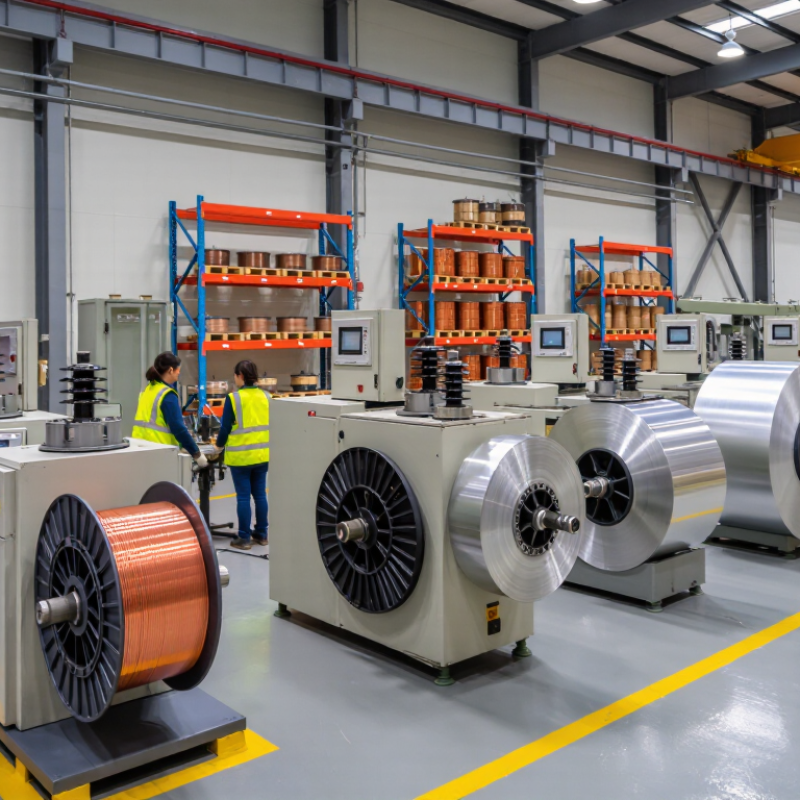
Transformer Winding Machines: Purpose and Operating Principles
Transformer Winding Machines: Purpose and Operating Principles
Transformer winding machines place insulated copper or aluminum wire around a bobbin or core in controlled layers. The winding pattern and number of turns help determine a transformer’s voltage ratio and electrical performance. Even tension matters: loose turns can shift, while excessive tension may damage wire insulation. A steady process also helps produce coils with consistent dimensions. Small variations still happen.
During operation, a spindle rotates the bobbin as a guide moves the wire across its width. Operators set winding speed, turn count, wire tension, and layer spacing to suit the coil design. Some machines pause at preset points so insulation can be added between layers or windings. Sensors and controls can improve repeatability, but they cannot replace careful setup. A poorly aligned guide may create crowded turns near the bobbin edge.
Tips: Check the wire path and tension before starting a batch. Wind a sample coil, then inspect its edges and insulation. Record settings that work. It is easy to trust a saved program too much; wire condition and bobbin size can still change the result.
10 Best Transformer Winding Machines for Buyers — Purpose and Operating Principles
| Machine type | Operating principle | Typical capability | Best suited for | Automation level | Key buying considerations |
|---|---|---|---|---|---|
| Manual bench winding machine | A hand crank rotates the coil former while a mechanical or electronic counter records turns. The operator guides and tensions the conductor. | Small coils made from fine or light-gauge wire; capacity depends on the former and installed counter. | Prototypes, repair work, laboratories, and low-volume production. | Manual | Check counter accuracy, speed control, former compatibility, guarding, and whether a reliable tensioning device is included. |
| Semi-automatic layer winding machine | A motor rotates the winding mandrel while a guided traverse lays the conductor in controlled layers; the operator handles setup and insulation placement. | Small-to-medium coils using round or rectangular wire, subject to tooling and conductor dimensions. | Distribution-transformer coils and repeat jobs that need consistent layer placement. | Semi-automatic | Assess traverse accuracy, turn counting, tension range, layer-change controls, and the time required to change mandrels. |
| CNC precision wire winding machine | Servo-driven axes coordinate spindle rotation, wire traverse, and often tension control according to a programmed winding pattern. | Programmable multilayer coils; supported wire sizes and coil dimensions vary by machine configuration. | Repeat production where winding patterns, turn counts, and placement need to be controlled consistently. | Automatic winding with programmed setup | Review axis count, program storage, tension feedback, recipe changeover, operator training, and compatibility with production data systems. |
| Transformer foil winding machine | Metal foil and interleaving insulation are unwound from separate reels, tensioned, and wound together onto a mandrel. | Aluminum or copper foil coils; workable foil width, thickness, and coil size depend on the decoiler and tension system. | Low-voltage windings in distribution transformers and other foil-coil applications. | Typically automatic with operator-assisted loading | Check foil-width range, edge alignment, insulation feeding, tension control, welding or lead-connection provisions, and safe reel handling. |
| High-voltage disc winding machine | The conductor is wound into separate disc sections, with programmed turns and insulation or spacers placed between sections as required. | Disc coils using round or rectangular conductor; capacity depends on mandrel size, conductor handling, and tooling. | High-voltage transformer windings that require controlled disc geometry and insulation placement. | Semi-automatic to CNC-controlled | Verify disc indexing, conductor tension, spacer handling, lead routing, winding-pattern flexibility, and access for inspection. |
| Continuous disc winding machine | The machine winds connected disc sections in sequence, guiding the conductor through transitions between sections while maintaining the specified pattern. | Continuous disc coils for larger transformer designs; practical size and conductor limits are machine-specific. | Power-transformer windings where a continuous winding structure is part of the design. | Usually CNC-controlled or operator-assisted automatic | Ask for a demonstration using the intended winding pattern; check transition control, conductor handling, setup requirements, and quality-record options. |
| Helical winding machine | One or more conductors are wound helically around a rotating mandrel; guides and spacer systems control pitch and conductor position. | Coils using heavier or parallel conductors, with pitch and coil size set by the design and machine tooling. | Transformer windings and reactors that use helical or screw-type winding arrangements. | Semi-automatic to automatic | Check parallel-conductor capacity, pitch adjustment, spacer insertion, mandrel load rating, and the range of coil diameters. |
| Current-transformer and instrument-transformer precision winder | A precision spindle winds a programmed number of turns, often with fine-wire tension control and a dedicated fixture for small coils. | Small, accurately counted coils; wire range and achievable tolerances depend on the fixture and control system. | Current transformers, voltage transformers, and other instrument-transformer coils. | Automatic or semi-automatic | Prioritize turn-count verification, low-tension handling, repeatable fixture location, fine-wire break detection, and traceable job settings. |
| Paper-insulated conductor winding machine | The conductor is fed through a paper-wrapping unit and then wound, coordinating insulation feed with conductor travel and winding speed. | Paper-covered wire or strip, depending on the wrapping head and conductor path. | Transformer coils requiring paper insulation applied during the winding process. | Typically automatic feed with operator setup | Confirm paper-width and overlap adjustment, insulation tension, splice handling, conductor-size range, and access for cleaning and maintenance. |
| Heavy-duty power-transformer coil winder | A reinforced winding frame rotates a large mandrel while powered drives and tensioning equipment control heavy conductors and coil buildup. | Large, heavy coils; allowable diameter, width, weight, and conductor configuration are specified for each machine. | Large power-transformer production and other demanding, high-load winding work. | Operator-assisted, with powered rotation and optional CNC functions | Check maximum coil load, mandrel and shaft deflection, foundation requirements, braking, safety guarding, and service support. |
Note: These are machine categories rather than branded models. Capabilities are indicative: actual limits and achievable tolerances depend on the machine configuration, tooling, conductor material, coil design, and applicable production requirements.