Which Copper Nickel Alloy Is Best for Marine Use in 2026?
Choosing the best Copper Nickel Alloy for marine use in 2026 depends on the job, not just the seawater. Salt spray, warm coastal water, and fast-moving seawater can create different demands. Even a small change in flow or maintenance access can affect material choice.
For many pipes, condensers, and heat exchangers, 90/10 copper-nickel is a practical starting point. It offers useful corrosion resistance and is widely used in marine systems. Where seawater velocity, impingement, or erosion risk is higher, 70/30 may be worth evaluating. It is not automatically the better choice. Cost, fabrication, and operating conditions still matter.
Look closely at the details. A cooling-water line with steady flow is not the same as a pump outlet with turbulent flow. Temperature, water cleanliness, fittings, weld quality, and stagnant sections can all influence performance. These factors deserve attention before selecting a grade. Some specifications overlook them.
This guide compares common copper-nickel grades and explains where each may fit. It also considers seawater piping, heat exchangers, and other marine applications. The goal is a useful, evidence-minded comparison, not a universal promise. Actual selection should be checked against project conditions and qualified engineering guidance. No grade suits every vessel. A careful choice starts with the water, the system, and the expected service life.
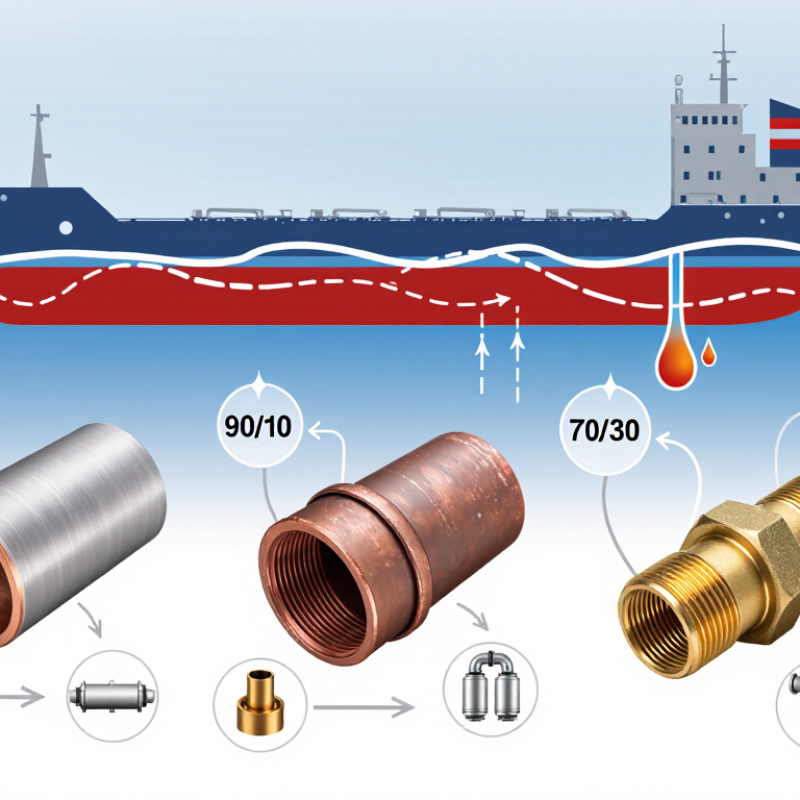
Copper-Nickel Alloys: Composition and Marine Properties
Copper-nickel alloys combine copper with nickel, while iron and manganese may be added to improve strength and seawater performance. The familiar 90/10 grade contains about 10% nickel; 70/30 contains about 30%. Exact compositions vary by specification. Copper remains the main component.
In marine service, both grades develop a protective surface film in clean, flowing seawater. This helps limit corrosion in pipes, heat exchangers, and seawater systems. The film needs oxygen to form and recover. Stagnant water, deposits, or poor installation can weaken performance. Details matter. The 90/10 grade suits many ordinary seawater applications, while 70/30 is often selected for higher flow speeds or more demanding conditions. It is not automatically the better choice. I would check water chemistry, temperature, flow, and system design before choosing.
Tips: Confirm the applicable material specification, then match alloy grade to operating conditions. Avoid stagnant pockets and keep surfaces clean. Small design details can matter more than the alloy name.
Key Factors for Choosing an Alloy for Marine Service
Marine alloy selection starts with the water, not the alloy name. Seawater temperature, salinity, dissolved oxygen, and suspended sand all affect service life. Copper Development Association technical guidance gives typical maximum seawater velocities of about 3.5 m/s for 90/10 copper-nickel and 4.5 m/s for 70/30. These are screening values, not guarantees; turbulence, solids, and poor flow transitions can cause localized attack below those limits.
For moderate-flow pipes and heat exchangers, 90/10 may offer a practical balance of corrosion resistance, formability, and cost. Where flow is faster or erosion risk is higher, 70/30 is often worth assessing. Check the full assembly, too: weld quality, crevices, deposits, and contact with dissimilar metals can matter as much as the grade. The Copper Development Association’s copper-nickel seawater guidance emphasizes clean surfaces and controlled flow. Real systems are messier. A small pocket of stagnant water can defeat a sound material choice.
Tips: Compare actual flow rates with the guidance, inspect elbows and inlets, and confirm the design with seawater-specific engineering data before specifying an alloy.
Best Copper-Nickel Grades for Common Marine Applications
For most seawater piping, 90/10 copper-nickel (UNS C70600) is a practical starting point. Its roughly 10% nickel content, with iron and manganese additions, helps resist corrosion in flowing seawater. It is commonly used for shipboard piping, heat exchangers, and condenser tubes. Flow matters. In low-flow branches or stagnant sections, deposits can build up and undermine performance, even when the alloy is suitable.
Where seawater velocity or erosion risk is higher, 70/30 copper-nickel (UNS C71500) may be a better fit. Its higher nickel content generally offers greater resistance to impingement attack, but the added cost may not be justified in every system. Not always. A pump outlet, tight bend, and long straight pipe face different conditions, so grade selection should follow actual flow, temperature, and service data.
For valves, fittings, and smaller seawater lines, C70600 is often considered because it combines useful corrosion resistance with broad fabrication options. Specify compatible joining materials, avoid sharp flow changes where practical, and inspect welds and supports for crevices or trapped water. Copper-nickel develops a protective surface film over time, but that process is not instant. Early operation deserves attention, especially where water flow is uneven or suspended solids are present. A design can look sound on paper and still need adjustment after commissioning.
Installation, Maintenance, and Environmental Considerations in 2026
Marine performance depends on installation as much as alloy grade. Copper-nickel 90/10 suits many seawater lines; 70/30 can be preferable where water velocity or turbulence is higher. Confirm the grade against the system’s flow, temperature, and design requirements. During installation, prevent iron contamination from tools or nearby carbon-steel work. Remove weld debris, flush thoroughly, and avoid dead legs where water can stagnate. A clean drawing can still miss a trapped pocket.
Maintenance should track leaks, deposits, vibration, and local erosion near bends and pump outlets. NACE International’s IMPACT study estimated corrosion costs the global economy US$2.5 trillion annually, or 3.4% of global GDP. That figure covers many industries, but it underscores why routine inspection matters. For environmental planning, document alloy composition and recycled content, and send replaced pipe to an appropriate metal-recycling stream. Long service life helps, but it does not excuse poor installation.
Tips: Keep copper-nickel parts clean and separate from iron during storage and fitting. Record water-flow conditions and inspection findings. Small details matter. Recheck areas after commissioning; early deposits can be easy to miss.