
Choosing the right Aluminium Winding Wire in 2026 requires more than comparing prices or conductivity figures. Transformer builders now examine thermal class, insulation thickness, flexibility, surface quality, and long-term enamel performance. The best wire depends on the winding design, operating temperature, voltage stress, and available manufacturing equipment.
Dr. John J. Shea, an electrical insulation specialist, offers a practical reminder: “Transformer reliability begins with disciplined insulation design, not simply with higher conductivity.” This principle matters when comparing enamelled aluminium wire, paper-covered wire, self-bonding wire, and rectangular aluminium conductors. Each type leaves a different footprint inside the coil. A rectangular conductor can improve slot filling, while a round wire may simplify automated winding. Thin enamel saves space, but it can demand tighter process control.
Small details matter.
In real production, technicians may notice scratched enamel, uneven edges, or inconsistent bonding after several winding cycles. These defects are easy to underestimate. They can increase partial-discharge risk, complicate repairs, or reduce service life. However, material choice alone cannot guarantee performance. Supplier testing, traceability, winding tension, and thermal validation remain essential. This guide compares the leading Aluminium Winding Wire types expected to attract buyers in 2026. It considers efficiency, insulation reliability, handling, cost, and application fit. Some recommendations may change as standards, alloy formulations, and motor designs evolve. That uncertainty deserves attention. A responsible purchase decision should combine datasheets with sample testing and advice from qualified electrical engineers.
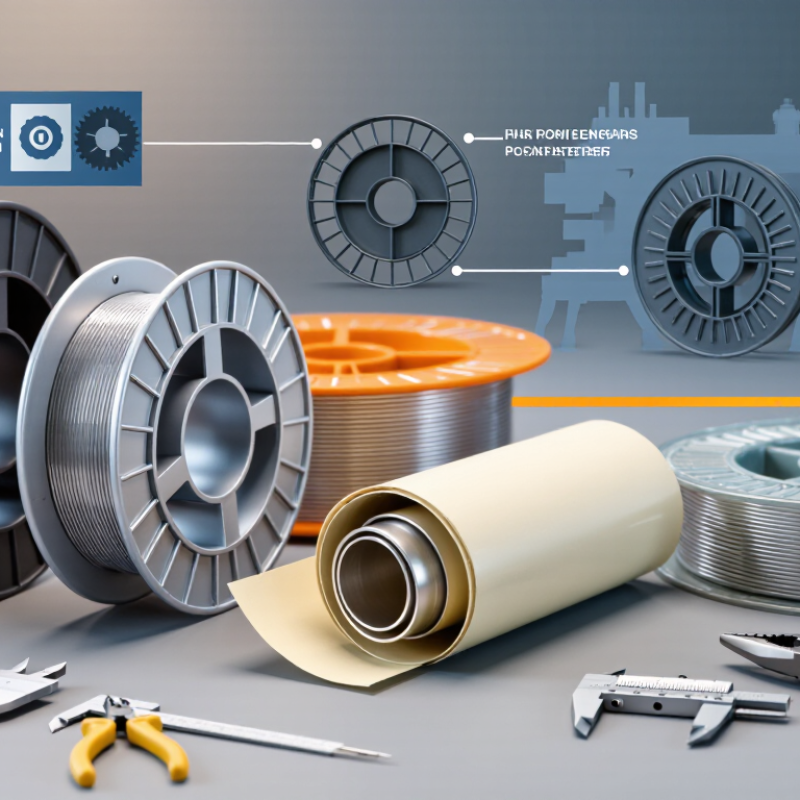
Aluminium winding wire is an insulated electrical conductor used to form coils. It carries current through motors, transformers, generators, and other electromagnetic equipment. Compared with copper, aluminium weighs less and usually costs less. Its lower conductivity requires a larger cross-sectional area for the same electrical load. Aluminium also expands more with heat. That trade-off matters.
In 2026, common types include round enamelled wire, rectangular enamelled wire, bare wire, and paper-covered wire. Round wire suits compact motor windings and general coil production. Rectangular wire can fill winding spaces more efficiently in high-capacity equipment. Bare aluminium wire needs separate insulation during assembly. Paper-covered versions are often selected for certain transformer designs. Selection depends on current, temperature, insulation class, winding space, and connection method. Small detail, big consequence.
Aluminium winding wire is widely used in distribution transformers, industrial motors, household appliances, generators, and renewable-energy equipment. Its light weight can reduce the mass of large coils and simplify transportation. Installers must prepare the oxide layer before making reliable joints. Crimping pressure, compatible terminals, and thermal cycling also deserve careful checking. A scratched enamel layer may create a hidden failure point. I would not treat aluminium as a universal copper replacement. Real performance depends on design quality and workmanship, not the conductor alone. Tensile strength, insulation adhesion, resistance testing, and heat testing should be verified before production.
In 2026, aluminium winding wire will stand out where low weight, cost control, and efficient production matter together. Enamelled round aluminium wire remains practical for motors, transformers, and compact coils. Its insulation must survive heat, vibration, and repeated bending during winding. Technicians often choose a larger conductor area to offset aluminium’s lower conductivity than copper. That decision affects slot fill, terminals, and cooling paths. Small details matter.
Rectangular aluminium winding wire may gain attention in traction motors and high-power transformers. Its flatter profile can improve slot utilization and shorten some winding paths. However, forming pressure must stay controlled, because sharp corners can damage enamel. Self-bonding enamel can help stabilize finished coils, especially where vibration is severe. High-temperature insulation also deserves consideration near hot spots. Temperature ratings need testing, not guesswork.
Bare or lightly insulated aluminium wire still suits selected transformer and coil designs, but oxide formation complicates connections. Reliable production requires approved joining methods, clean surfaces, controlled torque, and checks after thermal cycling. In field work, I have seen wire pass electrical tests yet fail after poor terminal preparation. That result is easy to underestimate. Aluminium is not a universal copper replacement. Designers should compare resistance, current density, thermal expansion, winding tension, and lifecycle cost for each assembly. One choice can look efficient on paper and become troublesome in service. This is where supplier data, prototype winding, and independent inspection earn their value.
2026 Top Aluminium Winding Wire Types to Buy?
Aluminium winding wire saves weight and material cost, but conductivity needs careful comparison. The International Aluminium Institute reports aluminium at about 61% IACS conductivity at 20°C. Copper reaches nearly 100% IACS. Therefore, aluminium conductors usually need a larger cross-sectional area. Rectangular wire can improve slot filling and reduce wasted space. Round enamelled wire remains easier to wind and process.
Insulation is equally important. IEC 60317 classifies enamelled winding insulation by thermal endurance, including 155°C, 180°C, and 200°C grades. Select the class according to hotspot temperature, overload cycles, and cooling conditions. ASM Handbook data places commercially pure aluminium thermal conductivity near 237 W/m·K at room temperature. Actual winding performance can be lower. Alloy content, joints, varnish, and tight coil packing all restrict heat flow. This is where basic catalogue comparisons become unreliable.
Tips: Request conductivity at 20°C, resistance temperature coefficients, insulation class, bond strength, and thermal ageing results. Compare equal resistance, not equal diameter. Check rectangular wire for large motors and transformers. Use round wire when winding flexibility matters. Ask for test data under your operating temperature. A cheaper wire may need more aluminium, larger slots, or stronger cooling. I would not trust conductivity alone; it is only one part of the thermal path.
Comparison of representative aluminium conductor and insulation combinations by electrical conductivity, conductor thermal conductivity, and insulation thermal class.
How to compare: Higher conductivity and thermal conductivity generally support lower electrical losses and improved heat dissipation. A higher insulation thermal class allows the winding system to operate at a higher continuous temperature, but actual performance also depends on wire size, enamel thickness, impregnation, cooling, and winding design.
Representative engineering values: aluminium 1350 is commonly around 61.8% IACS and approximately 237 W/m·K; 8000-series aluminium alloy values vary by alloy and temper. Insulation thermal classes are based on commonly used IEC 60317 insulation-system classifications. Always verify the applicable standard and supplier datasheet before purchase.
Choosing aluminium winding wire starts with the electrical application, not the lowest quoted price. For motors and generators, enamelled round aluminium wire suits compact coils and automated winding equipment. Select a thermal class that matches the winding temperature, insulation system, and expected duty cycle. Small household motors may need different heat resistance than industrial pumps running continuously.
For distribution transformers, rectangular aluminium wire can improve space use and reduce winding height. Paper-covered or film-insulated types may suit oil-filled or dry-type designs, depending on the insulation system. Check conductor dimensions carefully. A tiny size error can change resistance, temperature rise, and available slot space. It happens more often than purchasing teams expect.
Aluminium forms an oxide layer quickly. Proper stripping, joint preparation, and compatible connectors are essential for stable electrical contact. Ask suppliers for conductivity data, dimensional tolerances, thermal-class evidence, and routine test reports. Confirm compliance with relevant IEC or equivalent national standards. Traceable batch records also matter when a winding later fails inspection.
Do not choose wire only by ampacity. Review operating frequency, cooling method, vibration, bending radius, and coil geometry. A self-bonding enamel may simplify coil shaping, but it can behave poorly with unsuitable curing temperatures. This is where specifications can mislead. Laboratory performance does not always match a crowded production line. Test a small sample under real winding tension before approving a large purchase.
Before buying aluminium winding wire in 2026, identify the winding design and operating temperature. Round wire suits many compact coils, while rectangular wire can improve slot filling. Bare aluminium wire needs separate insulation. Enamelled wire is usually more practical for motor and transformer production.
Check electrical resistivity, diameter tolerance, elongation, and surface quality. A small diameter error can change resistance and coil temperature. Inspect the enamel for pinholes, bubbles, scratches, and uneven coverage. Thermal class matters too. Select insulation that matches the actual heat rating, not only the advertised maximum. Ask for test reports, production-batch traceability, and compliance with relevant electrical wire standards.
Do not judge quality by a bright surface alone. It can look excellent and still fail adhesion or flexibility tests. Bend a sample around the specified mandrel, then inspect cracks under magnification. Measure resistance at a controlled temperature, because aluminium changes resistance noticeably with heat. Also check joint compatibility, since aluminium connections may oxidize and increase contact resistance. Storage deserves attention. Keep coils dry, sealed, and away from chemical vapors.
A reliable supplier should explain alloy, temper, coating system, spool dimensions, and delivery tolerances clearly. Vague answers are a warning. One purchasing mistake is comparing price per kilogram instead of usable electrical performance. Aluminium is lighter than copper, but the required conductor size may be larger. I would also request a small trial batch before committing to full production. No checklist catches every issue. Real winding trials can reveal problems that paperwork misses.
| Aluminium Winding Wire Type | Typical Construction | Common Applications | Main Advantages | Important Limitations | What to Check Before Buying |
|---|---|---|---|---|---|
| Bare Round Aluminium Wire | Solid, uninsulated round aluminium conductor | Magnet wire insulation processes, electrical conductors, and custom winding production | Lower density than copper; suitable for applications where weight reduction matters | Lower conductivity per cross-sectional area than copper; aluminium oxide requires careful joining and termination | Conductor alloy, diameter tolerance, temper, surface cleanliness, resistivity, and compatibility with the planned insulation system |
| Enamelled Round Aluminium Wire | Round aluminium conductor covered with a thin enamel insulation film | Motors, transformers, inductors, relays, and other electromagnetic coils | Compact insulation layer; enables turns to be wound without separate paper or tape between every turn | Enamel can be damaged by excessive tension, sharp edges, abrasion, or unsuitable soldering and stripping methods | Insulation class, thermal rating, film build, pinhole performance, flexibility, scrape resistance, and solderability or stripability |
| Enamelled Rectangular Aluminium Wire | Flat or rectangular aluminium conductor with enamel insulation | Large rotating machines, power transformers, traction equipment, and high-current windings | Better space utilization and improved packing factor than round wire in suitable slot geometries | More sensitive to bending radius, corner damage, dimensional variation, and handling during forming | Width-to-thickness ratio, corner radius, dimensional tolerance, insulation coverage, bending capability, and winding-machine compatibility |
| Self-Bonding Aluminium Magnet Wire | Enamelled wire with an additional bonding layer activated by heat, solvent, or pressure | Compact coils, miniature motors, voice coils, sensors, and windings requiring improved mechanical stability | Can reduce the need for separate coil-forming materials and help maintain coil shape | Bonding performance depends on activation conditions, storage, winding tension, and temperature exposure | Bonding activation method, bond strength, thermal class, compatibility with impregnation varnish, and recommended processing temperature |
| Paper- or Film-Covered Aluminium Wire | Aluminium conductor wrapped with insulating paper, polymer film, or a composite covering | Power transformers, oil-filled equipment, and applications requiring reinforced turn or layer insulation | Provides robust insulation and can be selected for specific dielectric, thermal, and mechanical requirements | Usually requires more winding space than enamel-only wire; covering may be damaged by excessive tension or moisture | Covering material, insulation thickness, dielectric strength, moisture resistance, thermal class, overlap, and winding tension limits |
| Anodized Aluminium Wire | Aluminium surface treated to form an anodic oxide insulation layer | Specialized coils, sensors, and applications where an oxide-based surface layer is acceptable | Surface oxide can provide electrical isolation in selected designs and may improve surface protection | Not a universal substitute for enamel insulation; oxide thickness, continuity, and terminal preparation are critical | Oxide-layer uniformity, dielectric performance, abrasion resistance, termination method, and compliance with the design’s insulation requirements |
| Aluminium Alloy Winding Wire | Aluminium-based conductor modified with alloying elements for specific mechanical or electrical properties | Specialized windings requiring a balance of conductivity, strength, weight, and formability | May offer improved mechanical strength or handling characteristics compared with commercially pure aluminium | Electrical resistivity and forming behavior vary by alloy; joining procedures may need qualification | Alloy designation, conductivity or resistivity, tensile strength, elongation, temper, joining method, and applicable technical standard |
| Stranded or Multi-Wire Aluminium Conductor | Multiple insulated or bare aluminium strands assembled into one flexible conductor | Flexible leads, large coils, bus connections, and equipment where installation flexibility is important | Improved flexibility and easier routing than a single conductor of equivalent overall size | Higher manufacturing complexity; strand insulation, current distribution, and termination quality must be controlled | Strand count, strand diameter, lay length, overall diameter, insulation arrangement, bend radius, and termination compatibility |
