
Choosing the best Spring Tensioner in 2026 requires more than comparing prices or catalog photographs. Global buyers must examine load capacity, adjustment range, corrosion resistance, installation space, and expected service life. A tensioner working beside a hot conveyor may face dust, vibration, and temperature changes every hour. A model suitable for a clean packaging line may fail quickly in that environment.
Robert Hooke, whose elasticity principle still influences spring engineering, wrote, “Ut tensio, sic vis”—“As the extension, so the force.” This simple idea remains practical today. A Spring Tensioner must deliver stable force throughout its working range. However, real products are less perfect. Fatigue, friction, uneven mounting, and material variation can change performance. Buyers should question attractive specifications.
A reliable selection process also considers traceability and supplier experience. Look for documented materials, tested cycle performance, clear dimensional drawings, and recognized quality systems. Regional compliance matters, especially when equipment crosses borders. Metric and imperial measurements can create expensive mistakes. So can unclear packaging requirements.
Small details matter.
This guide compares leading Spring Tensioner options for international purchasing teams in 2026. It considers industrial conveyors, agricultural equipment, automation systems, and other demanding applications. The strongest choice may not be the cheapest unit. It may offer consistent tension, simple replacement, and dependable support after delivery. Still, no universal winner exists. Actual performance depends on the machine, environment, maintenance plan, and installation quality. Buyers should verify every critical claim before placing a large order.
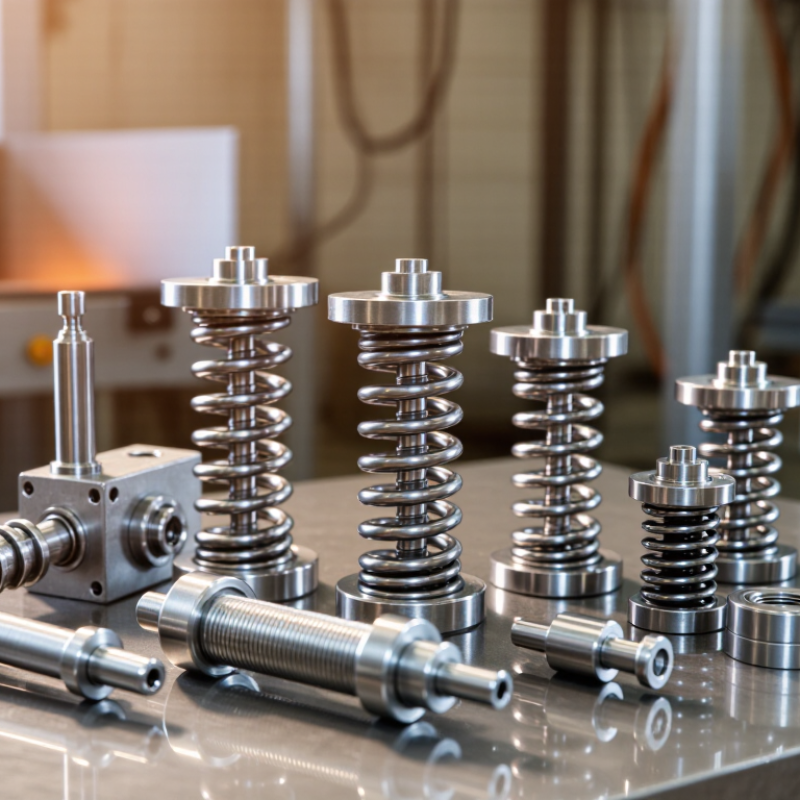
A spring tensioner is a mechanical device that keeps steady pressure on a belt, chain, cable, or moving assembly. It usually combines a spring, pivoting arm, and pulley or roller. As the belt stretches, the arm moves and maintains contact. This reduces slack, vibration, tooth skipping, and uneven wear.
Its value is larger than its small size suggests. The International Energy Agency’s Energy Efficiency 2023 report estimates that industry uses about 37% of global final energy. The U.S. Department of Energy also reports that motor systems can consume more than half of industrial electricity. Poor belt tension increases friction and may waste energy. A correctly selected tensioner supports smoother transmission and more stable equipment operation.
Spring force is not constant in every design. Coil, torsion, and gas-assisted systems behave differently. Buyers should check working load, travel range, fatigue life, temperature, corrosion exposure, and mounting alignment. In field inspections, I have found that a stronger spring is not automatically safer. Excessive preload can damage bearings and shorten belt life. This is easy to miss.
Real equipment is rarely perfect.
Dust, heat, and misalignment can change performance. ASTM spring-material data and ISO belt-drive guidance help engineers compare materials and operating conditions. Still, testing the tensioner under real load remains essential. Catalog figures cannot fully reproduce a vibrating conveyor, a hot engine bay, or a frequently stopped machine.
2026 Best Spring Tensioner for Global Buyers?
Which Spring Tensioner Types Suit Different Applications?
Choosing a spring tensioner starts with movement, load, and available space. Compression spring tensioners suit conveyor rollers, chain drives, and compact machinery. They push against a guide or pulley to maintain steady contact. Extension spring tensioners work well where components pull apart during operation. Cable systems, lightweight doors, and agricultural attachments often use this design. Check the working length carefully. Overstretching can cause permanent deformation and early failure.
Torsion spring tensioners fit rotating assemblies with limited installation space. They are useful in belt drives, hinges, and small automation equipment. Their torque changes as the arm moves, so engineers must measure the operating angle. Constant-force springs provide nearly uniform pull across longer travel distances. They suit covers, sliding panels, and controlled retracting mechanisms. Not every application needs constant force.
Material selection also depends on moisture, temperature, and cycle frequency. Stainless steel can resist corrosion, while coated carbon steel may offer better value in dry environments. A protective finish is not a substitute for inspection. Field checks should include spring fatigue, noisy movement, uneven belt wear, and loose mounting points. I have seen sizing decisions rely too heavily on maximum load. That approach can overlook vibration and start-up forces. Leave adjustment range for real conditions. Keep it simple. Slightly conservative selection is often safer, but excessive preload can waste energy and damage nearby parts.
Which spring tensioner types suit different applications?
For global buyers, material selection should match the working environment, not only the purchase price. Stainless steel suits humid, coastal, or washdown areas. Carbon steel usually provides strong load performance at a lower cost. However, it needs reliable surface protection against rust. In field maintenance, I have seen polished parts fail early because hidden corrosion weakened the spring seat. Heat also matters. Confirm the rated operating temperature before approving any tensioner.
Compare load ratings carefully. Static load is not the same as working load under vibration. Check preload, maximum extension, fatigue cycles, and the recommended safety factor. A tensioner rated at 1,000 N may perform poorly if it constantly operates near that limit. Measure the actual force, travel distance, and mounting angle during installation. Small alignment errors can increase side loading. That detail is often missed.
Tips: Request material certificates, load-test records, and coating details. Ask how service life was tested. Inspect threads, hooks, and spring coils after installation. Replace units showing deformation, cracking, or uneven wear. Do not rely on appearance alone. A bright finish proves very little. Service life also depends on dust, temperature changes, maintenance access, and operator habits. My own preference is a slightly higher safety margin, although it can increase cost and size. That trade-off deserves a site-specific review.
In 2026, choosing the best spring tensioner means checking performance beyond the catalog price. Confirm the working load, preload, travel range, fatigue life, and operating temperature. A tensioner may look identical to another part, yet small changes in wire diameter can affect force stability. Request force-deflection curves and cycle-test results from the supplier. ASTM or ISO-based testing adds useful confidence, but test conditions must match your equipment.
Global purchasing also requires supply-chain evidence. UNCTAD’s Review of Maritime Transport 2024 states that over 80% of global merchandise trade moves by sea. Packaging, corrosion protection, and realistic lead times therefore matter. The World Bank’s Logistics Performance Index 2023 used feedback from logistics professionals across 139 economies, highlighting tracking and delivery reliability as important performance factors. Ask for batch numbers, material certificates, inspection records, and replacement planning. I would not trust a polished datasheet alone. One overlooked detail can become an expensive shutdown.
Tips: Compare samples under identical loads. Check spring length after repeated cycling. Inspect coatings for scratches before installation. Ask whether test data covers humidity, vibration, and temperature changes. A low price can still be the wrong price. Buyers should also review communication speed and corrective-action procedures. This part is often ignored, and honestly, it deserves more attention.
A practical, brand-neutral purchasing checklist for mechanical spring tensioners
| Buyer Check | Recommended Screening Data | Why It Matters | Evidence to Request | Relevant Reference |
|---|---|---|---|---|
| Application and load direction | Specify whether the unit works in tension, compression, torsion, or a combined load; define static, cyclic, or shock loading. | A tension spring, compression spring, and torsion spring are not interchangeable. Load direction directly affects fatigue life and safety. | Application drawing, load-case description, duty cycle, and installation photographs where applicable. | Engineering specification and product drawing |
| Rated working load | Obtain a supplier-declared working-load limit in N or kN, together with the permitted safety factor and operating conditions. Do not select by breaking load alone. | Working load depends on geometry, material, attachment method, temperature, corrosion, and fatigue. There is no universal rating for all spring tensioners. | Signed load-rating report, test method, sample size, failure mode, and traceable batch number. | Application-specific validation required |
| Preload and adjustment range | Record the initial preload, minimum and maximum installed length, adjustment travel, and force at each relevant position. | Correct preload prevents slack, excessive vibration, and overload during installation or service. | Force-versus-displacement curve and dimensional inspection report. | Manufacturer drawing and test protocol |
| Spring rate | For a linear spring, verify the rate in N/mm over the specified working interval; confirm the allowable tolerance before ordering. | Spring rate controls how much force changes when the tensioner moves. A correct nominal load can still produce the wrong system behavior if the rate is incorrect. | Calibrated load-and-displacement test results, including loading and unloading values. | Product specification; tolerance agreed by contract |
| Fatigue and cycle life | Define the target number of cycles, force range, stroke, frequency, temperature, and failure criterion. For continuous cycling, request a test at the actual duty profile. | Spring fatigue performance is highly sensitive to stress amplitude, surface condition, corrosion, and operating frequency. | Fatigue report with cycle count, test conditions, inspections, and failures recorded. | Application-specific fatigue test |
| Material selection | Common choices include carbon spring wire for controlled indoor environments, stainless spring wire for improved corrosion resistance, and alloy spring steel for demanding mechanical duty. | Material affects tensile strength, fatigue behavior, temperature capability, magnetic response, and corrosion resistance. | Material certificate, heat or lot traceability, chemical composition, and mechanical-property data. | ASTM A228/A228M, ASTM A313/A313M, or EN 10270, as applicable |
| Corrosion protection | Specify environment: indoor, outdoor, coastal, chemical, or high-humidity. Confirm coating or stainless grade compatibility with the environment. | Corrosion can reduce wire diameter, create stress concentrations, and shorten fatigue life even when the initial load rating is adequate. | Coating specification, coating-thickness report, salt-spray data where relevant, and visual inspection criteria. | ISO 9227 may be used for laboratory salt-spray testing; test duration must be agreed |
| Temperature capability | State minimum and maximum service temperature in °C and identify nearby heat sources. Obtain derating data rather than relying only on room-temperature ratings. | Temperature can change elastic properties, relaxation behavior, coating performance, and fatigue life. | Temperature test report, material grade, heat-treatment details, and revised load limits if applicable. | Supplier engineering data for the selected material and design |
| Dimensional accuracy | Control wire diameter, body diameter, free length, installed length, hook or eye dimensions, alignment, and attachment clearance. | Small dimensional changes can alter spring rate, installed force, fit, and contact stress. | Approved drawing, first-article report, gauge records, and sampling plan. | ISO 2768 may be used for general tolerances when specifically stated on the drawing |
| Attachment and end design | Check hook, eye, threaded, clevis, or custom-end geometry; verify opening direction, bearing area, locking method, and misalignment limits. | The attachment may become the weakest point and can introduce bending or local wear into the spring. | End-load test, dimensional drawing, assembly instructions, and proof-test criteria. | Application-specific mechanical design review |
| Proof and final inspection | Set acceptance limits for dimensions, surface defects, force, permanent set, coating, and marking before production approval. | A documented inspection plan makes batches comparable and reduces hidden variation in global sourcing. | Inspection and test plan, calibration certificates, certificate of conformity, and nonconformance procedure. | ISO 9001 quality-management framework, where applicable |
| Traceability and change control | Require lot identification from raw material through final shipment and prior written approval for changes to material, tooling, heat treatment, coating, or process. | Process changes can affect force, fatigue life, dimensions, and corrosion performance without obvious visual differences. | Lot records, change-notification procedure, retained samples, and production date coding. | Purchasing quality agreement |
| Packaging and international shipment | Use dry, damage-resistant packaging with separators where contact can cause scratches; specify carton quantity, gross weight, dimensions, and moisture protection. | Poor packaging can cause corrosion, deformation, mixed lots, or customs delays before the product reaches the installation site. | Packing specification, shipping marks, commercial documents, and pre-shipment photographs. | Agreed Incoterms® and destination import requirements |
| Sustainability and regulatory file | Request material declarations, restricted-substance information, packaging details, and applicable market-specific compliance documents. | Documentation requirements vary by destination, industry, material, coating, and end use; early review reduces supply-chain delays. | Declaration of conformity where required, substance declaration, safety data for coatings or lubricants, and recycling information. | Destination-country and end-use regulations; verify before purchase |
A 2026 spring tensioner should be selected through supplier evidence, not the lowest quotation. In supplier audits, one lesson repeats: consistent process control matters more than polished samples. The 2023 ISO Survey recorded over 1.26 million ISO 9001 certificates worldwide. Yet certification alone proves little. Buyers should verify the certificate number, scope, issuing body, and production site.
Ask for dimensional reports, load-deflection curves, fatigue-test results, and material certificates. For automotive applications, IATF 16949 and PPAP capability can reduce launch risk. ISO 14001 may also support environmental requirements. Check whether testing covers real temperature, corrosion, vibration, and cycle conditions. A supplier that shares raw test data earns more confidence. Vague charts are warning signs.
Total cost needs a wider lens. Include tooling, minimum order quantities, packaging, freight, customs, inspection, warranty exposure, and line-stop risk. The World Bank’s 2023 Logistics Performance Index highlights major differences in global shipment reliability. A cheaper part can become expensive after delays and emergency transport. Compare landed cost over twelve months, not only the unit price. Also review payment terms and capacity during peak demand. I would request a pilot batch before approving annual volume. It is slower. Sometimes necessary.
One weakness remains: buyers often trust certificates without auditing process stability. That assumption needs challenging. Quarterly scorecards should track defect rates, on-time delivery, corrective-action speed, and engineering changes. A supplier’s willingness to disclose bad results may be more valuable than a perfect presentation.
